
After years of experiencing frustration due to stagnant discussions on fossil fuels at UN climate meetings, over 50 nations are convening in Colombia for the inaugural summit solely focused on phasing out oil, gas, and coal.
The Transitioning Away from Fossil Fuels conference kicks off today in Santa Marta as countries aim to address the issue outside the standard UN framework, where major producers have typically opposed efforts to limit fossil fuel consumption.
Although the gathering will not result in a treaty or mandatory commitments, advocates anticipate that a smaller coalition of willing nations can make headway in the practical aspects of transitioning away from the fuels that are exacerbating the climate emergency.
Nikki Reisch, the climate and energy program director at the Center for International Environmental Law in the U.S., expressed, “The significance of hosting this conference is to signify a pivotal moment, acknowledging the necessity for a dedicated platform where fossil fuels take center stage.”
However, a complicating factor looms over this summit: Canada, a prominent oil and gas producer, is participating without ministers but with negotiators.
“This is about taking action. It’s not a matter of debating the semantics of phasing out fossil fuels, but rather focusing on the how – and doing so collectively,” Reisch conveyed to CBC News from Santa Marta.
Attendees at the Santa Marta conference hope that by convening a smaller group of willing nations, they can delve into the specifics of transitioning away from fossil fuels without becoming entangled in debates about the necessity of such action.
Fossil fuels – oil, gas, and coal – contribute to two-thirds of the greenhouse gas emissions responsible for global warming. The remaining emissions stem from various human activities like deforestation for agriculture, waste decomposition, and livestock farming.
Despite their detrimental environmental impact, fossil fuels play a vital role in fueling global economies. The primary UN climate conference, COP, has faced criticism for alleged influence from fossil fuel interest groups and companies, with major oil-producing nations often obstructing resolutions aimed at phasing out or reducing fossil fuel usage.
Tzeporah Berman, chair and founder of the Fossil Fuel Treaty Initiative, remarked, “Fossil fuels are the principal driver of climate change, yet discussions on phasing them out have been conspicuously absent from the United Nations climate change convention dialogues.”
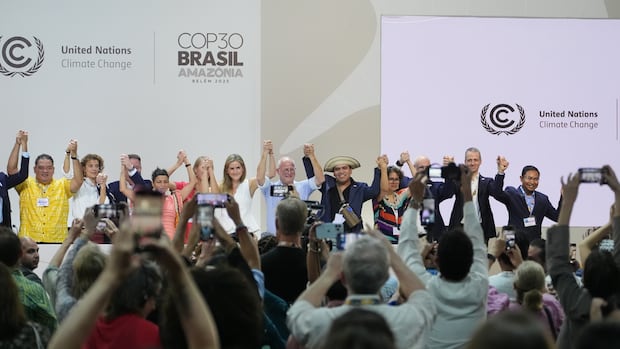
Last year’s COP, hosted by Brazil, failed to reach a consensus on a roadmap to phase out fossil fuels despite pressure from numerous countries. Disappointed by this outcome, Colombia and the Netherlands opted to organize the separate Santa Marta conference.
This gathering signifies a departure from the usual diplomatic gatherings, where unanimous agreement is typically required for any final statement or agreement.
Canada, sending negotiators but no ministers, holds the distinction of being the largest oil and gas producer attending the summit.
“It’s crucial to have producer nations actively engaged in these discussions,” Reisch emphasized.
The Canadian government concurs, acknowledging Colombia and the Netherlands’ efforts to advance the discourse through the conference and highlighting Canada’s unique perspective as a major fossil fuel producer.
While Canada has committed to achieving its net-zero target by 2050 under the Paris Agreement, official federal estimates indicate that the oil and gas sector remains the country’s highest emitter, with emissions from the oilsands sector continuously rising despite efforts to decarbonize other sectors of the economy.
The Santa Marta conference is not anticipated to yield a formal treaty or conclusive document. As an independent event outside the UN framework, its decisions lack binding authority over other nations and omit some major polluters like China and the U.S.
Nonetheless, organizers hope that it will catalyze subsequent discussions and negotiations toward a tangible path to decarbonization.
“A lack of success would be to view this dialogue as the endpoint, failing to consider the implications moving forward from Santa Marta,” Reisch remarked.
Given its smaller participant group, the conference could potentially form a potent alliance capable of advocating for the fossil fuel issue at the upcoming UN climate conference and circumventing efforts by major countries to stifle debates.
The Santa Marta conference will run until April 29, with plans already underway for a follow-up conference hosted by the Pacific Island nation of Tuvalu, which faces severe threats from rising sea levels.