
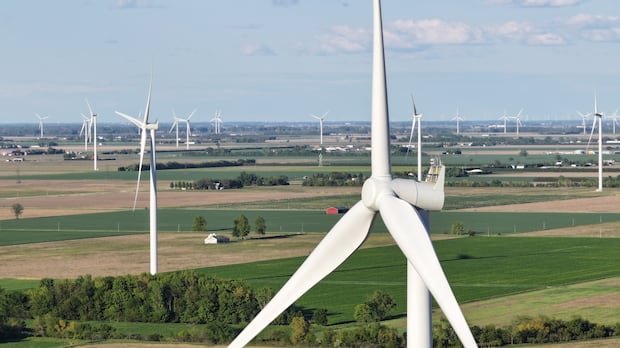
Manitoba Hydro has revealed a new plan that outlines a nine-year timeline for the construction of new wind farms to enhance its power generation capacity. The provincial Crown corporation aims to address the demand for electricity through a combination of energy-saving initiatives and infrastructure development over the next decade. By 2030, gas-fired turbines in Brandon are scheduled to be operational to mitigate concerns about winter peak power demands surpassing the available supply.
In the recently released 2025 integrated resource plan, Manitoba Hydro aims to make an additional 1,760 megawatts of electricity accessible to consumers within the next decade. This target represents over a quarter of the corporation’s current generating capacity, estimated at 6,400 megawatts under optimal conditions. The plan also includes strategies to enhance existing hydroelectric plants, construct new gas turbines in Brandon with a capacity of 750 megawatts, and introduce a five-megawatt battery storage pilot project by 2034.
Furthermore, the plan envisions the completion of new wind farms by Indigenous-led private companies by 2035, with an expected capacity of 600 megawatts. These wind farms are officially recognized as 120 megawatts for accreditation purposes. Additionally, energy-saving measures totaling 860 megawatts are proposed to reduce peak electricity demand during extreme weather conditions in Manitoba.
Hydro’s communications director, Scott Powell, expressed confidence in the plan’s ability to meet the energy needs of Manitobans while ensuring reliability, safety, and affordability. Despite the comprehensive nature of the plan, Powell emphasized its flexibility to adapt to changing conditions if necessary.
Prior to the plan’s release, the North American Electric Reliability Corporation conducted an assessment of Manitoba Hydro, highlighting the corporation’s ability to withstand mid-winter power shortages for the next four years due to power-sharing agreements with North Dakota and Minnesota. However, concerns have been raised by the Consumers Coalition regarding the timeliness and realism of the plan, prompting a review by the Public Utilities Board.
Moving forward, stakeholders are poised to engage with Manitoba Hydro to ensure that the plan aligns with evolving factors such as climate change, technological advancements, and energy efficiency opportunities.