
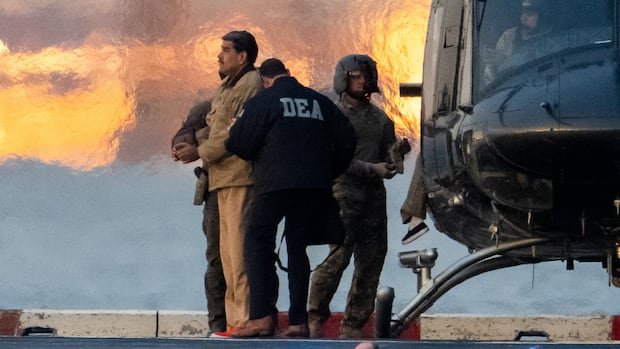
Ousted Venezuelan leader Nicolás Maduro, currently detained with his wife Cilia Flores in a Brooklyn jail following an early morning arrest in Caracas, is anticipated to claim immunity from prosecution as a head of state, a point hinted at by his attorney during a court session on Monday. On the contrary, the United States is likely to contest Maduro’s legitimacy as Venezuela’s leader since 2019 when his re-election was deemed fraudulent. Legal experts point out potential weaknesses in both arguments.
Margaret Donovan, a former U.S. federal prosecutor and Yale Law School lecturer, suggested that the Department of Justice could persuade a judge that Maduro is not a legitimate head of state due to doubts about his election. Maduro’s defense is expected to emphasize his sovereign immunity as a head of state, a stance that aligns with similar claims made by leaders seeking protection from criminal charges.
During the court appearance where both Maduro and Flores pleaded not guilty, Maduro’s lawyer highlighted his client’s status as the head of a sovereign state, emphasizing the privileges associated with that position. The defense team plans to challenge the legality of Maduro’s arrest and address multiple legal issues through extensive pretrial filings.
Maduro, Flores, and others are accused of collaborating with drug cartels to facilitate the transport of large quantities of cocaine into the U.S., facing charges including narco-terrorism conspiracy and possession of illegal weapons. If found guilty, they could potentially receive life sentences.
Comparisons have been drawn between Maduro’s arrest and the arrest of Panama’s Manuel Antonio Noriega, despite differences in their respective cases. Noriega’s failed immunity claim was attributed to his lack of holding the title of president during his de facto rule. In contrast, Maduro asserts multiple electoral victories, with some international recognition of his authority.
The U.S. government’s narco-terrorism charge against Maduro involves framing cocaine trafficking as a form of terrorism, blending criminal and national security concerns. Legal experts question the novelty and effectiveness of this charge, anticipating challenges from Maduro’s defense team. The U.S. justifies its actions against Maduro as a law enforcement operation, distancing it from a declaration of war while preparing to counter potential criticisms.
Notably absent from the indictment against Maduro is any reference to fentanyl, a departure from previous accusations by the Trump administration. The charges focus on cocaine trafficking, emphasizing the criminal aspect rather than the national security angle associated with fentanyl smuggling. Maduro’s defense strategy may also address the military-style arrest and the firearms-related charges, which could present challenges in proving his involvement in drug trafficking conspiracies.