
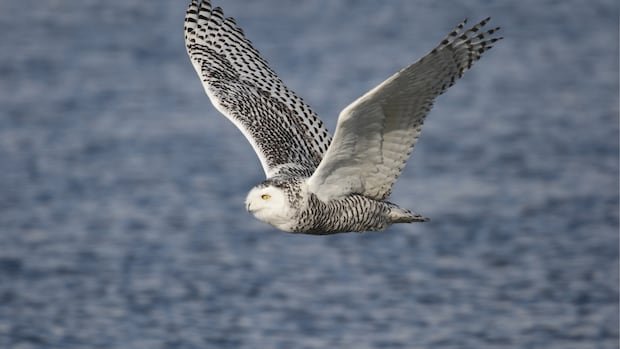
The population of snowy owls soaring over the Arctic tundra is declining significantly due to various threats, but the process of granting legal protection to these birds is moving slowly. These iconic creatures of the North are under threat from habitat loss, as the ground cover thickens and prey becomes scarcer. Additionally, collisions with vehicles, buildings, and power poles during migration are contributing to the dwindling numbers. The current population stands at around 14,000, with a decline of over 30% per decade.
The assessment of the snowy owl as threatened is attributed to the sharp decline in its numbers, according to Syd Cannings, a retired biologist who was part of the Committee on the Status of Endangered Wildlife in Canada. Despite the scientific evaluation of declining populations, legal protection is not automatically enforced. Extensive consultations involving researchers, federal, Indigenous, and local governments are conducted to determine conservation efforts after a species is classified as threatened, a process that can span over two years or longer.
The lengthy process from the assessment of a threatened status to the formal listing under federal law can take two years or more in the North, as precaution is exercised by the government to make informed decisions without hasty implications. The snowy owl, considered an indicator of environmental health and an umbrella species, is crucial for the ecosystem’s well-being. The species faces threats from changes in habitat due to a warming world, impacting its nesting and hunting grounds.
The federal government has initiated consultations following the assessment of the snowy owl’s status by the Committee. The assessment is the initial step in a series of actions under the Species at Risk Act. The main threats to the snowy owl include habitat changes, collisions with human structures, and exposure to avian flu and rodent poison. The intricate nature of the decline in snowy owl numbers poses a global threat that necessitates comprehensive actions.
Cameron Eckert, director of the Yukon Bird Club, highlighted the complexity of conserving species like the snowy owl, emphasizing the unpredictable nature of sea ice changes and lemming population fluctuations that affect the owl’s numbers beyond human control. As efforts to mitigate climate change progress, the impacts on biodiversity become more evident. The snowy owl holds a special appeal due to its long migration journeys, symbolizing a cultural connection to the far North that resonates with many.