
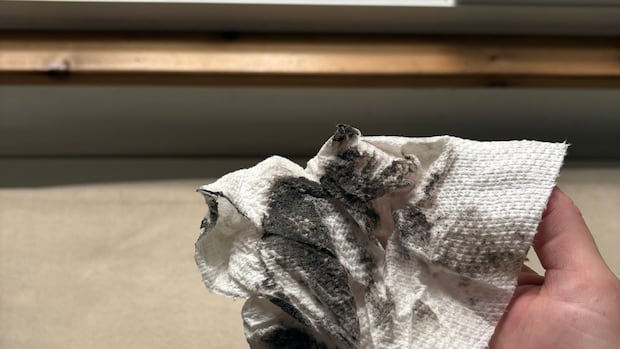
A group of researchers based in Hamilton has uncovered insights into the issue of soot accumulation in neighborhoods near the city’s industrial zone. This problem, which has persisted for years, resurfaced in early July, causing significant concern among residents.
Sarah Styler, an environmental chemistry associate professor at McMaster University, along with Grace Yao, a PhD candidate under Styler’s supervision, are part of the investigation titled “What’s the Grime?” Their study involved collecting samples across the city in 2024 and 2025, revealing the presence of harmful chemicals associated with coal burning in the soot. Additionally, higher levels of dust and polycyclic aromatic hydrocarbons (PAHs) were detected near the industrial area in northeast Hamilton.
Partnering with Environment Hamilton, Styler conducted the research with a $15,000 grant awarded by the university in 2024. Both Styler and Yao, residing in east Hamilton and Corktown respectively, have personal encounters with the soot issue. The study, which engaged 50 volunteers to collect soot samples, highlighted increased dust deposition near industrial sites, leading to higher concentrations of toxic compounds.
While the researchers focused on 13 different PAHs, they acknowledge that the grime may contain various other hazardous substances. Although the study couldn’t pinpoint the exact industrial sources of PAHs, Styler emphasized the importance of continuous monitoring and enhanced analytical capabilities for future investigations.
Styler emphasized that the findings may not come as a surprise to residents directly impacted by the soot fallout, as industrial emissions likely play a significant role in its composition. Despite the community’s frustration with the lack of official information, ongoing testing by the Ministry of the Environment, Conservation and Parks aims to identify the source of the issue.
The research team plans to present their results at a community meeting on August 20 and aims to expand the study to include more volunteers and explore additional compounds present in the grime. They are also investigating effective cleaning methods for addressing the soot accumulation.