
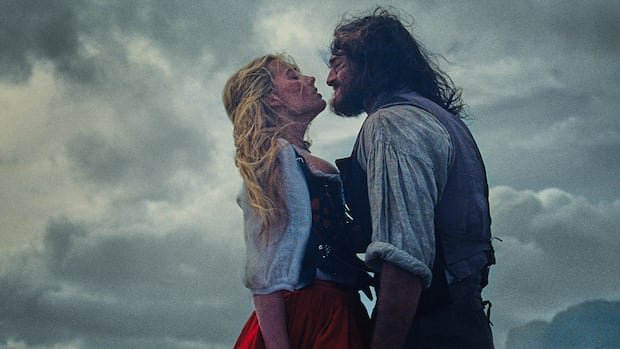
Emerald Fennell’s film adaptation of Emily Brontë’s “Wuthering Heights” is making waves for its unconventional approach. The title itself, with quotation marks, is a deliberate choice by Fennell to signify that this is not a typical adaptation but a personal reinterpretation based on her own teenage experience with the novel.
The movie presents a dreamlike and visually striking portrayal of the tragic love story between Heathcliff, played by Jacob Elordi, and Catherine, portrayed by Margot Robbie. However, while the film attempts to offer a fresh take on the classic tale, it often veers into territory that strays far from Brontë’s original intentions, leading to criticism from fans and critics alike.
One of the controversial aspects of the adaptation is the casting of Elordi as Heathcliff, a character originally described with features that suggest a non-white background. Fennell’s decision to cast Elordi based on her own vision rather than the character’s historical context has sparked debate about the authenticity and interpretation of the story.
Furthermore, the film takes liberties with the narrative structure and emphasis, placing an exaggerated focus on the doomed romance between Heathcliff and Catherine while neglecting other essential themes and plot elements of the novel. This shift in emphasis has led to a polarizing reception, with some appreciating the bold reinterpretation and others criticizing it for straying too far from the source material.
Overall, Fennell’s “Wuthering Heights” offers a unique and visually captivating take on the classic story, but its departures from the original text and thematic core have raised questions about the fidelity and effectiveness of the adaptation.