
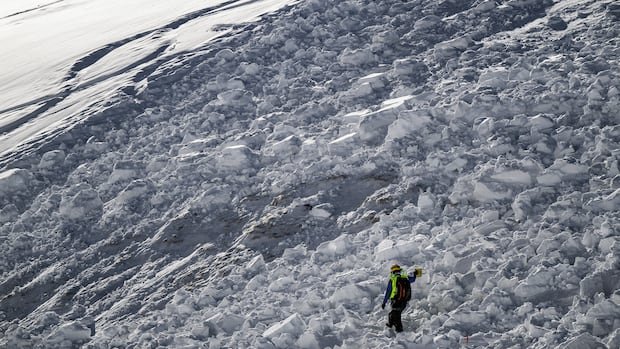
In February, separate avalanches in B.C. and Alberta resulted in five fatalities. During that same period, California and Utah experienced over a dozen avalanche-related deaths, with a particularly devastating incident claiming nine lives. Across Europe, spanning from Andorra to Slovakia, the ongoing season has seen 125 avalanche-related fatalities.
These recent tragic events underscore the persistent risks associated with backcountry activities, even for experienced individuals well-prepared for avalanche hazards. The unpredictability of avalanche occurrences further complicates readiness efforts.
Experts interviewed by CBC News shed light on the formation of avalanches, their unpredictability, and the potential impact of climate change on their severity. Avalanches are defined as moving masses of snow at visible speeds, typically downhill, requiring a strong layer over a weak layer to trigger an avalanche event.
Avalanche types vary, ranging from loose, less cohesive sluffs to heavy, water-logged chunks, each with distinct triggers. ‘Slab’ avalanches, characterized by cohesive snow masses breaking off hillsides, are considered the most hazardous by experts.
Despite advancements in understanding avalanche structures, predicting their exact timing remains challenging due to the unique nature of each event. Factors like weather patterns and snowpack variations contribute to this difficulty, making forecasting a blend of interpretation and historical data analysis.
Regarding the influence of climate change on avalanches, experts suggest a likely impact as the planet warms. Changes in precipitation patterns and snow amounts due to rising temperatures could lead to weaker snowpack layers, potentially increasing risks for off-trail enthusiasts.
In addition to staying informed with local forecasts and receiving proper training, individuals engaging in backcountry activities are advised to establish clear group rules and response protocols to mitigate risks effectively. This proactive approach can help enhance safety measures and minimize the potential dangers associated with avalanches.
Overall, the complex interplay between weather conditions, snowpack dynamics, and human behavior underscores the need for heightened awareness and preparedness when venturing into avalanche-prone terrains.