
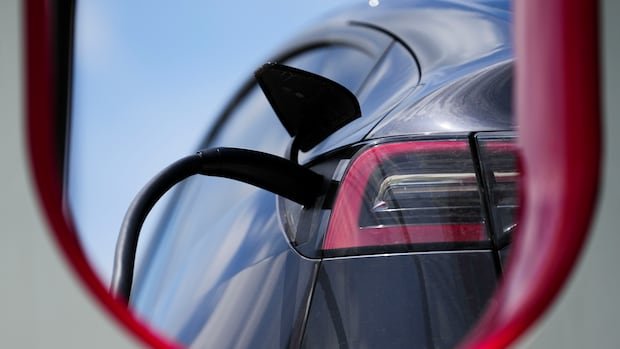
After a period of sluggish sales, electric vehicles are experiencing a surge in demand due to high gas prices and renewed government incentives. EV sales have been on the rise since January when the Liberal government reintroduced incentives, coinciding with escalating gas prices following military actions in the Middle East. According to Statistics Canada, new EV purchases in Canada increased from 8,672 in January to 21,574 in March before slightly dropping to 17,795 in April. Overall, EV sales in the first four months of 2026 saw a 20.8% increase compared to the same period in 2025.
More Canadian consumers are now considering EVs for their next vehicle purchase, with a JD Power survey showing a rise from 28% to 34% in the likelihood of buying an EV. Industry experts attribute this renewed interest to the affordability factor, driven by high gas prices and the return of EV incentives.
The reinstatement of incentives in February by the government, offering discounts of up to $5,000 on fully electric vehicles and $2,500 on hybrids made in Canada or under free trade agreements, has made EV prices more competitive with gas-powered vehicles. This move has attracted more consumers in recent months, with many citing the rising cost of gas as a significant motivator for considering EVs.
In response to the market shift, some customers are exploring low-cost Chinese EV brands, drawn by their competitive pricing. While regulatory challenges may hinder the entry of brands like BYD or Chery into the Canadian market, the interest in affordable EV options remains high.
Despite ongoing concerns such as range anxiety and charging infrastructure limitations, the decreasing cost of EVs has alleviated one of the major obstacles for potential buyers. With economic factors like high fuel prices and incentives driving EV adoption, industry experts anticipate sustained growth in EV sales in the foreseeable future, even though the overall vehicle sales may not exhibit a substantial surge.