
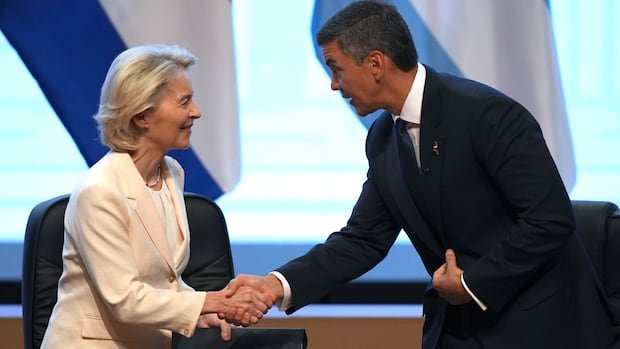
The European Union and the Mercosur group of South American nations have officially ratified a significant free trade pact after more than 25 years of challenging negotiations aimed at fortifying economic relations amidst escalating protectionism and global trade tensions. The signing event in Asunción, the capital of Paraguay, represents a major strategic win for the EU amid trade conflicts with the U.S. and China, expanding the bloc’s presence in a region abundant in natural resources that is increasingly contested by major powers.
The agreement underscores South America’s commitment to diversified trade and diplomacy, countering U.S. President Donald Trump’s assertions of dominance in the Western Hemisphere. European Commission President Ursula von der Leyen emphasized the geopolitical significance of the deal, highlighting the EU’s preference for fair trade over tariffs and advocating for enduring partnerships over isolation. The signing ceremony was attended by the leaders of Mercosur countries Argentina, Uruguay, and Paraguay, along with Brazil’s foreign minister, symbolizing a united effort to enhance prosperity for their nations.
By establishing one of the world’s largest free trade areas, the agreement, driven by South American agriculture-heavy nations and European industrial sectors seeking new markets, unites a consumer base of over 700 million people, representing a quarter of global GDP. Despite facing opposition from protectionist factions on both sides of the Atlantic, particularly European farmers concerned about potential influxes of low-cost South American agricultural products, the deal now awaits approval from the European Parliament. The accord aims to eliminate more than 90% of tariffs gradually over the next decade, with certain farm goods like beef subject to strict quotas to alleviate European farmers’ anxieties.
While Italy has backed the pact due to the allocated quotas and EU support for struggling farmers, France remains hesitant. The agreement’s implementation hinges on navigating these challenges and securing final ratification, paving the way for enhanced economic cooperation between the EU and Mercosur.