
In a mere fortnight, a multitude of athletes and a vast audience will gather in the crisp environs of Cortina d’Ampezzo for the commencement of the Olympic Winter Games. However, when compared to seven decades ago — the previous occasion the picturesque town hosted the event — recent findings from the U.S.-based non-profit Climate Central indicate that average temperatures have risen by over three degrees. In the period following the 1956 Winter Games, February temperatures averaged around –7 degrees Celsius. Fast forward to the years between 2016 and 2025, and the average temperature has climbed to –2.7 degrees Celsius.
Kristina Dahl, the vice president for science at Climate Central, remarked on this significant warming trend, highlighting its potential impact on temperature conditions, shifting from freezing to thawing temperatures. Utilizing a global temperature dataset dating back to the 1940s, Climate Central also revealed a decrease of 41 days annually in Cortina with temperatures below freezing compared to previous years.
Emphasizing the necessity of naturally cold and snowy conditions for optimal competition environments, Dahl stressed the importance of maintaining such conditions for the benefit of athletes. The analysis further divulged that average temperatures for the Winter Paralympics have similarly experienced a shift over the past five decades since their inception, with March temperatures in Cortina and Milan rising by 2.5 degrees Celsius and 2.1 degrees Celsius, respectively, since 1976.
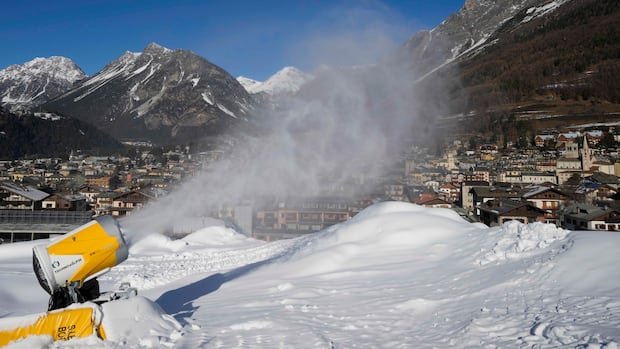
The increasing impact of climate change, primarily driven by fossil fuel consumption, has heightened the need for artificial snow in outdoor events, including the Winter Games. The dependence on artificial snow extends beyond the competition area, requiring substantial snow cover for safety and runoff zones. Concerns were previously raised regarding the artificial snow requirements at Livigno for hosting freestyle skiing and snowboarding events, which have since been alleviated due to improved regional temperature conditions.
The significance of reliable snowpack for the safety of athletes, particularly during high-speed disciplines like women’s downhill skiing, cannot be understated. Climate scientist and University of Waterloo professor Daniel Scott highlighted the risks associated with unreliable snow conditions, citing the 2014 Sochi Paralympics where warmer temperatures were linked to a higher rate of musculoskeletal injuries among athletes.
Looking ahead, the feasibility of future Winter Olympics is being called into question due to the impacts of climate change. A 2024 study, co-authored by Scott and commissioned by the International Olympic Committee (IOC), assessed 93 potential host locations for the Winter Games. Stress tests were applied to evaluate the ability to maintain necessary snowpack levels and ensure cold temperatures for snow course maintenance. In a ‘middle of the road’ scenario with moderately rising emissions, approximately 50 locations are projected to be suitable for the Winter Games in 2050, while the Paralympics face greater challenges with only 22 viable locations anticipated by mid-century.
Apart from potential venue changes, the evolving climate may necessitate adjustments in training methods for athletes worldwide. Dahl highlighted the possibility of certain events transitioning indoors and alterations in athlete training routines due to the shifting climate conditions.