
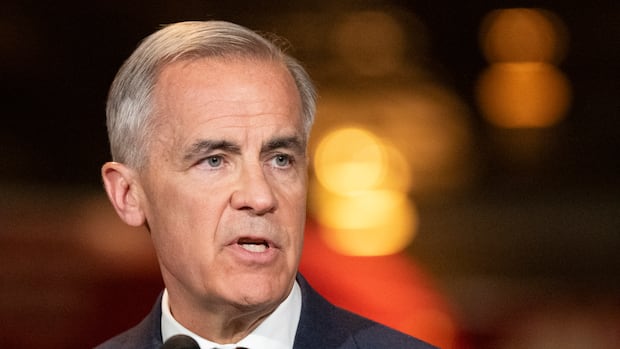
Prime Minister Mark Carney expressed that he is not taken aback by the Trump administration’s intention to impose tariffs on imports believed to be produced through forced labor.
A report issued on Tuesday by the U.S. Trade Representative Jamieson Greer’s office identified numerous countries, Canada included, as having inadequate enforcement measures regarding items produced via forced labor.
The document claimed that Canada and several other nations are not “effectively enforcing” bans on such imports.
Consequently, the U.S. plans to introduce a new 10 percent tariff affecting Canada and other nations, although this levy will not impact goods that comply with the Canada-U.S.-Mexico Agreement (CUSMA), which means that a significant portion of Canadian exports to the U.S. will be exempt.
“This is not unexpected; it’s been in the works by the U.S. for several months,” Carney told reporters on Wednesday at Parliament Hill.
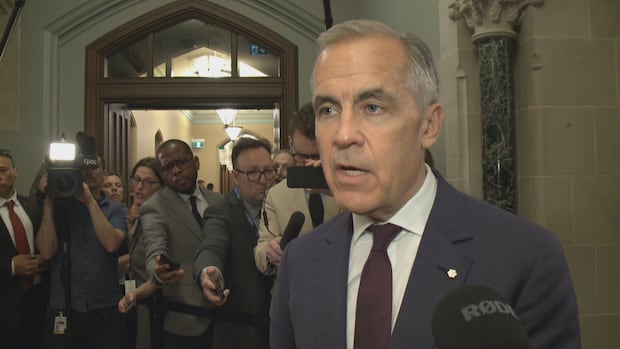
The U.S. is proposing a new 10 to 12.5 per cent tariff on dozens of countries, including Canada, over allegations of failing to enforce a ban on forced labour. Prime Minister Mark Carney said the motivation behind the tariff ‘is something that we share,’ and it ‘will not have an impact’ on the ‘vast majority’ of Canadian trade because of a CUSMA carveout.
This recent tariff announcement follows earlier levies enacted under the International Emergency Economic Powers Act (IEEPA), which were overturned by the U.S. Supreme Court in February.
U.S. President Donald Trump had invoked the IEEPA to impose tariffs on Canada and Mexico, citing a “flood of fentanyl” crossing the borders from those countries. He also implemented global tariffs on Liberation Day using the same authority.
After the Supreme Court’s decision, Trump pledged to initiate new tariffs through different avenues. He promptly enforced temporary tariffs under Section 122 of the U.S. Trade Act, although these tariffs will expire unless Congress approves an extension.
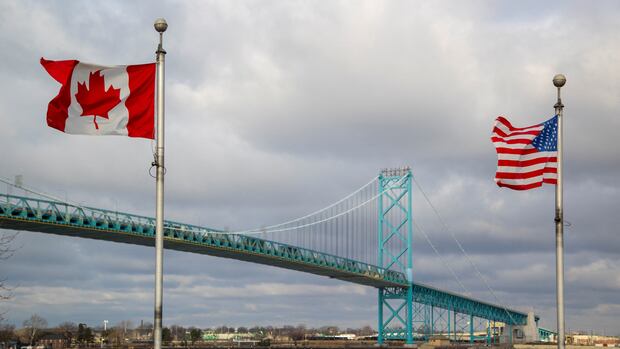
The U.S. is proposing a new 10 per cent tariff for dozens of countries it says have forced labour in their supply chains. CBC’s Janyce McGregor breaks down the allegations, how much weight they hold and what goods might be exempt from fees.
In March, Greer initiated an inquiry concerning forced labor practices under Section 301 of the U.S. Trade Act of 1974. The report released on Tuesday was the result of that inquiry.
According to the report, numerous other nations will face a heightened tariff of 12.5 percent due to their “failure to impose” an import ban on products associated with forced labor.
Dominic LeBlanc, the Canadian minister in charge of Canada-U.S. trade relations, explicitly connected the removal of the IEEPA tariffs with the report released by Greer’s office on Tuesday.
“This does not come as a shock, as the United States has communicated its plan to substitute the current baseline global tariffs set under Section 122 upon their expiration in July,” LeBlanc stated on X.
New enforcement rules coming, PM says
Despite this, Carney acknowledged his concerns regarding the importation of goods produced through forced labor and indicated that new regulations are in progress to enhance Canada’s enforcement framework. He mentioned that the government would present these regulations in the upcoming weeks.
Greer’s report was published just hours after his meeting with LeBlanc in Washington. The minister informed reporters after their meeting that they exchanged proposals regarding the CUSMA review and expressed optimism about this year’s assessment of the trade agreement.
CUSMA mandates that Canada collaborates with U.S. officials to ensure that products manufactured through forced labor are not allowed in the North American marketplace. Any perceived shortcomings in this area could lead to challenges in this year’s obligatory review of the agreement.
In the past, Americans have accused Canada of being slow to enforce the import ban, and there have been reports of items made through forced labor appearing in the Canadian market.
-
Carney defends Canada’s approach to forced labour amid fallout from floor-crossing MP’s comments
-
Analysis
Liberal MP’s Chinese forced labour comments come as U.S. probes Canada’s imports
-
Trump administration expands trade investigations to Canada, dozens of other countries
In 2021, CBC’s Marketplace investigated reports of forced labor within supply chains for apparel sourced from North Korea and tomato products from Xinjiang, China.
The Canadian Ombudsperson for Responsible Enterprise (CORE), established under the Trudeau administration, is tasked with addressing abuses by Canadian companies abroad related to forced labor, among other issues. However, this office has been without an ombud for nearly a year.
Carney stated on Wednesday that Canada possesses a “strong” framework to prevent the entry of goods produced through forced labor into the nation, but acknowledged that there is still room for enhancements.
“We aim to eliminate any occurrence of forced labor in goods and services, and we intend to leverage our influence to eradicate this practice of forced labor and child labor,” the prime minister remarked.
Opposition urge action on forced labour
Conservative foreign affairs critic Michael Chong labeled the recent U.S. decision as “unjustified,” yet urged the Liberal government to take more decisive action against forced labor.
“Prime Minister Carney has struggled to address this issue clearly, and for six years, the Liberal administration has consistently failed to prevent products associated with forced labor from entering Canada. This negligence now jeopardizes Canadian employment and trade,” Chong wrote in a post on X.
NDP MP Heather McPherson remarked in a statement to CBC News that forced labor is a worldwide issue that “Canada has lagged on for decades while other governments have taken action.”
“In 2025, the Carney administration had the chance to reaffirm a commitment to eradicate forced labor from Canadian supply chains,” she stated. “They did not follow through, and now they face criticism from Canada’s largest trade partner.”
McPherson indicated that her party will support governmental initiatives to combat forced labor, but she noted that she has “yet to observe any tangible progress from the Liberals to safeguard the human and labor rights of workers.”