
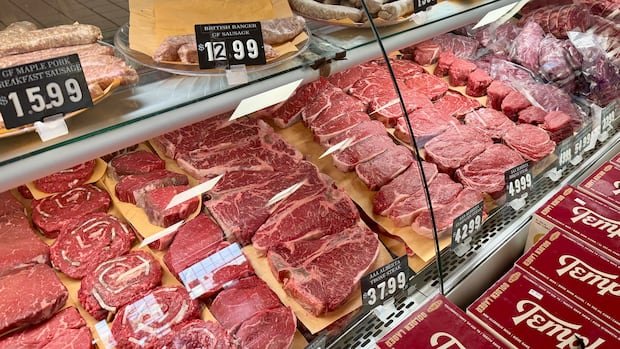
As Canadians gear up for grilling season, many are facing steep prices for steak and hamburgers. Beef costs have soared by 62.6 percent since 2021, driven by prolonged droughts, reduced cattle herds, and increased production expenses. Recent data from Statistics Canada in April revealed a 12.5 percent rise in beef prices over the past year, with a peak increase of 17.7 percent in November 2025.
Shopper Linda Brown from Calgary expressed her dismay, stating, “It still hurts to buy steak. It’s so darn expensive,” despite primarily purchasing hamburger meat. Industry experts attribute the price surge to a constrained cattle supply due to successive droughts. Nevertheless, consumer demand for beef remains robust, reaching record levels.
The current pricing challenges trace back to issues that emerged years ago, with severe droughts in Canada, the United States, and Mexico in 2021 prompting ranchers to reduce their herds. As a result, beef prices have steadily climbed, with Canada’s beef herd at its lowest point in four decades. However, there are signs of a recovery as the Canadian cattle herd saw its first growth since 2018, increasing by 2.5 percent to 11.1 million at the start of this year.
Kent Holowath, managing 175 cows near Rumsey, Alta, noted the positive trend, saying, “Prices have rebounded to the point where it’s looking good to put cattle back into your cow herd.” Despite the promising outlook, escalating costs are hindering expansion for producers like Holowath due to rising expenses in areas like fuel and feeding cattle.
While relief at grocery stores may not be immediate due to the time required for animals to move through the system, consumers are adapting by opting for lower-cost beef cuts or shifting towards more affordable protein alternatives like chicken or pork. The high prices have also impacted retailers like Greg Keller, who has adjusted pricing strategies to navigate the market.
Looking ahead, weather conditions will influence herd recovery, with dry conditions in the Prairies remaining a concern. Some producers are taking advantage of high prices to sell their herds and retire. Despite tight supply, stable prices are anticipated, with continued strong demand for beef among Canadians.
In the midst of rising beef prices, Canadians continue to show a strong affinity for beef and other proteins globally. Until supply aligns with demand, consumers planning summer barbecues should expect beef prices to remain elevated without immediate reductions.