
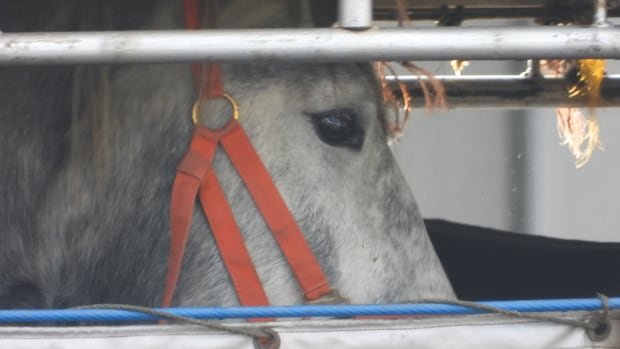
A recent probe conducted by animal welfare activists reveals ongoing suffering, injuries, and fatalities among horses transported for slaughter in Japan. This has sparked renewed calls for Canada to prohibit these shipments.
Kaitlyn Mitchell, the legal advocacy director at Animal Justice, emphasized the ongoing issues, stating that horses are still perishing and collapsing during flights. The report, a collaboration between Animal Justice, the Japan-based Life Investigation Agency (LIA), and the Canadian Horse Defence Coalition (CHDC), highlighted the inhumane nature of shipping horses from rural areas in Canada to Japan for slaughter.
While retired Conservative Senator Donald Plett opposes a ban on these shipments, he advocates for stricter reporting requirements and accountability for incidents where horses are harmed or killed during transport. Official data from Statistics Canada shows that in 2023, 2,512 horses were exported to Japan for slaughter, amounting to $19 million in total value. The industry involves around five export companies and numerous producers primarily located in Alberta, with additional participation from Manitoba and Ontario.
Horsemeat, often consumed raw as sashimi or basashi in Japan, is considered a delicacy in certain regions. Recent investigations by Animal Justice and LIA uncovered Government of Japan records from 18 shipments involving an estimated 1,822 horses transported from Edmonton and Winnipeg between September 2024 and September 2025. By cross-referencing Japanese data with Canadian Food Inspection Agency (CFIA) documents obtained by CHDC through information requests, the groups identified nine horses that died due to illness or injury during transport.
Numerous other horses suffered from various ailments, including lacerations, hoof and eye wounds, fever, diarrhea, and collapsed conditions. Shockingly, some horses had to be euthanized post-transport due to severe injuries. Notably, discrepancies exist between the Japanese records and CFIA documents, with the latter failing to reflect the full extent of injuries and fatalities during transport.
Despite these distressing findings, Senator Plett highlights the importance of addressing animal welfare concerns with factual evidence and enhanced oversight, rather than completely halting the industry. He emphasizes the need for improved record-keeping and accountability to safeguard the well-being of transported horses.
In response to these revelations, Animal Justice has urged Ottawa to prohibit live horse exports by amending regulations under the Health of Animals Act. The advocacy group has also taken legal action against Carolyle Farms in a significant animal rights private prosecution, underscoring the urgency of addressing the welfare of horses transported for slaughter.