
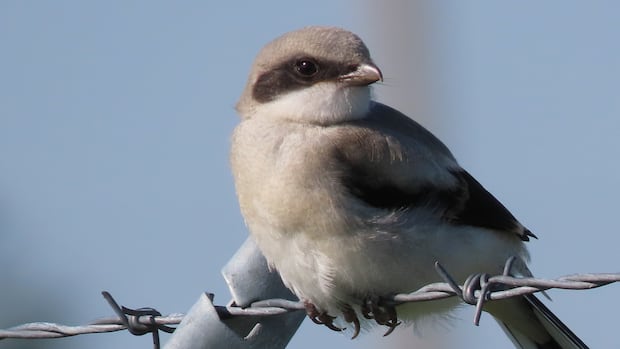
The appearance of songbirds is described as soft-feathered and plump, with white patches flashing on their grey and black wings when in flight. Despite this gentle appearance, these birds, known as loggerhead shrikes or “butcher birds,” exhibit ruthless behavior during feeding, capturing prey like bugs, mice, and frogs which they impale on thorns or barbed wire before consuming. These shrikes, recognized as a threatened species, primarily breed in Saskatchewan’s Prairies, but conservationists express concern over the gradual disappearance of their habitats.
Kerry Hjertaas, a birder from Saskatoon, witnessed shrikes in action near his workplace, observing their predatory behavior firsthand. He recounted an incident where shrikes impaled prey on a barbed-wire fence, tearing it apart alongside another shrike, an experience he found fascinating. Emily Putz, the habitat stewardship co-ordinator of Nature Saskatchewan’s shrubs for shrikes program, explained that shrikes resort to impaling prey due to their lack of talons in their feet, a behavior unique to this bird species in Saskatchewan.
The population of shrikes in Saskatchewan is estimated at around 40,000 individuals, classified as a threatened species, one step below being endangered. Putz highlighted the significant impact of habitat loss on shrikes, as they heavily rely on native prairies for nesting and hunting, with only about 13 percent of this habitat remaining in Saskatchewan. The birds have adapted by utilizing shelterbelts, but these too are under threat as landowners clear them for larger agricultural machinery.
Developments near Hjertaas’s office may force the shrikes to relocate, emphasizing the ongoing challenges faced by these birds. While the City of Saskatoon acknowledges shrike sightings, it has no designated critical habitat for them nearby. To protect these unique birds, efforts like reporting sightings to organizations and planting shrubs like buffalo berry and hawthorn are crucial. Supporting conservation initiatives ensures the preservation of shrikes for future generations to appreciate their presence and ecological role.