
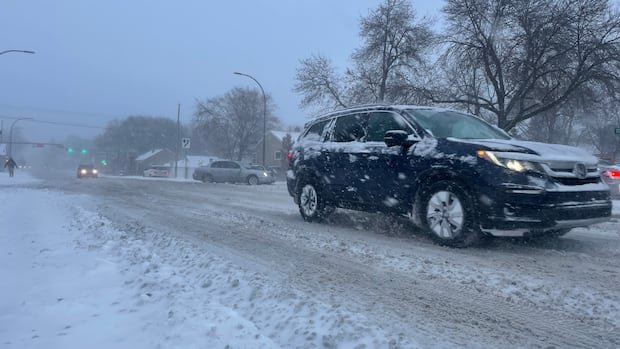
Edmonton experienced a substantial increase in snowfall this December, mirroring other parts of Alberta that also saw some of their highest December precipitation levels in decades. This snowy start to winter is seen as a boon for farmers who struggled with drought conditions in 2025.
According to Terri Lang, a meteorologist with Environment and Climate Change Canada, by December 28, Edmonton had received 416% more precipitation than its 30-year average, making it the city’s sixth wettest December on record. Lang also shared water equivalent precipitation data for several other municipalities as of the same date: Banff was at 308% above average, Fort McMurray at 318% (ranking as the sixth wettest December), Grande Prairie at 418% (fourth wettest), and Fort Vermilion at 245% (third wettest).
Lang highlighted the rarity of this snowfall, noting that many of these locations were experiencing one of their wettest years on record. She explained that the consistent track of snow-producing systems was leading to significant snow accumulation over time, potentially benefiting farmers across the province.
Notably, Red Deer and Fort Chipewyan saw precipitation levels 106% above their averages in December. Conversely, Southern Alberta experienced slightly drier conditions, with Calgary receiving 81% and Lloydminster 86% of their typical December precipitation.
Although any precipitation is welcomed, Lang cautioned that the impact would heavily rely on how the snow melts in the spring. A rapid or overly warm thaw could lead to runoff and flooding, especially if the ground remains frozen.
Dr. Linda Gorim, chair of the Western Grains Research Foundation, emphasized the importance of proper soil moisture absorption. She stressed that snow plays a crucial role in Western Canada’s crop growth, underscoring the necessity for farmers.
Raymond Chittick, a local farmer, mentioned that the December snowfall could help replenish the region’s decreasing water table, particularly benefiting dugouts used for watering animals. However, he noted that June rain would have a more substantial impact on farmers.
Looking ahead, Lang advised Albertans to expect more snow in the coming days, as the prevailing weather pattern shows little indication of shifting.
In conclusion, the recent snowy conditions in Alberta offer hope for alleviating drought concerns and supporting agricultural activities in the region.