
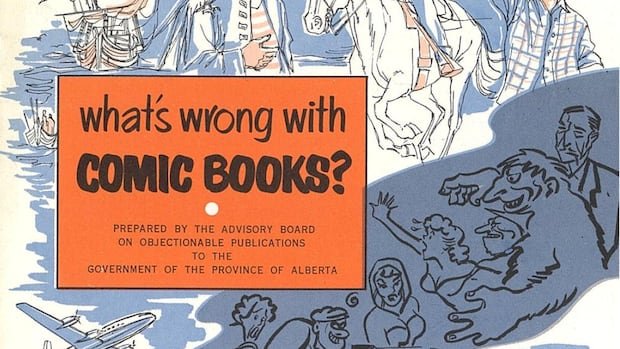
The new restrictions on books in Alberta schools now target materials with explicit sexual content, following a historical trend of banning objectionable graphics to safeguard children. Back in 1954, the Advisory Board on Objectionable Publications was formed in response to concerns over the influence of “crime comics” on children.
Recently, a ministerial order was issued, instructing school staff to remove library resources depicting sexual acts, both in visual and written forms. This led to the removal of 226 books from Edmonton Public Schools, including popular titles like “The Handmaid’s Tale,” “The Color Purple,” and “The Godfather.”
After facing backlash, the government revised the order to include bans on visual depictions in addition to written passages. Although the reasons for book bans have evolved over the decades, historian Amie Wright notes similarities in the societal conditions that fuel censorship movements.
Wright’s research on comic book censorship in Canada highlights how moral panics can arise from societal anxieties. These panics, akin to past concerns over rock music and video games, often stem from a climate of fear and uncertainty.
The historical context of comic book censorship in Canada dates back to 1948 when the fatal shooting incident in Dawson Creek involving boys who mimicked comic book characters sparked widespread condemnation of comics. This incident, covered by national media, contributed to the negative perception of comic books.
The article discusses the establishment of the Advisory Board on Objectionable Publications in Alberta in 1954, which actively censored and removed objectionable materials from newsstands. The board’s work extended to monitoring newsstand content until the early 1970s, impacting a significant number of periodicals.
Despite initial public support, the board’s influence declined over time, leading to its eventual dissolution in 1976. Wright emphasizes the historical resistance of Albertans to censorship, noting parallels between past and present debates over governmental oversight in children’s reading materials. The recent book restrictions in Alberta schools have sparked controversy and opposition, reminiscent of past challenges to censorship efforts.