
Specialists probing the Air Canada plane crash at LaGuardia that resulted in the deaths of two pilots faced setbacks due to security delays at other airports on Monday, as confirmed by the U.S. National Transportation Safety Board (NTSB). The ongoing partial U.S. government shutdown has led to extensive queues nationwide.
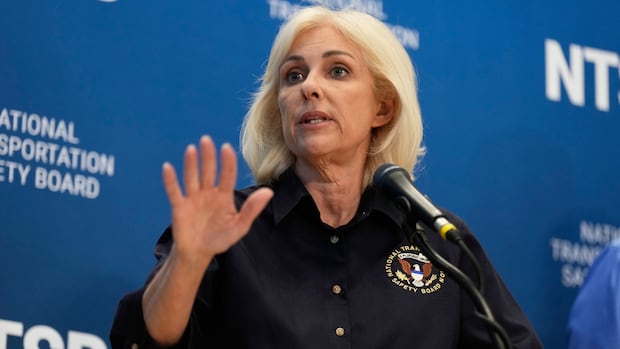
NTSB chair Jennifer Homendy reported at a press briefing on Monday that certain investigators encountered difficulties reaching New York. “Our air traffic control specialist had to wait in line with TSA for three hours until we had to seek help from Houston to expedite her arrival,” Homendy stated. “It has been extremely challenging to assemble the complete team.”
Hundreds of thousands of Department of Homeland Security personnel, including those from the Transportation Security Administration (TSA), have been working without pay since the department’s funding was not renewed by Congress last month. Numerous TSA agents have either called in sick or resigned, resulting in staffing shortages that have prompted some airports to intermittently close checkpoints, causing significant delays.
In response, the Trump administration deployed armed Immigration and Customs Enforcement (ICE) officers to over a dozen airports to assist in managing the lengthy queues. This action has received criticism and raised safety concerns among travelers.
Aviation expert Scott Hamilton, managing director of Leeham Company, disclosed that he canceled a flight from Chicago to Atlanta due to reported wait times of four to six hours. However, he had a smooth round trip to Seattle from Chicago last week, breezing through security at both airports. Hamilton emphasized the varying operational statuses of airports, attributing the discrepancies to the number of absent TSA staff.
Expressing apprehension about the presence of ICE agents, Hamilton highlighted potential unease among foreign travelers. He advised Canadians to avoid traveling to the U.S. unless absolutely necessary, emphasizing the uncertainty surrounding airport operations.
According to DHS, nearly 11% of scheduled TSA agents—over 3,200 individuals—missed their shifts on Monday. Some airports experienced significantly higher absenteeism rates, with 40% of TSA agents at William P. Hobby International Airport in Houston and 37% at Atlanta’s Hartsfield-Jackson International Airport failing to report for duty. The shutdown has led to at least 458 officers resigning from their positions.
Issues with airport operations during the previous 43-day government shutdown, centered on healthcare spending and subsidies, suggest that the current challenges may persist. Hamilton predicted prolonged disruptions as TSA will need to recruit and train new personnel.
The administration’s announcement of deploying ICE at TSA checkpoints unless funding for DHS is secured has heightened tensions between Republicans and Democrats since February 14. The standoff revolves around the reluctance of Democrats to fund ICE and Customs and Border Protection without operational modifications, following the deaths of Alex Pretti and Renee Good at the hands of federal agents in Minneapolis in January.
Political science professor Aaron Hoffman expressed concerns about ICE agents’ behavior and emphasized a potential discrepancy between the administration’s assurances and actions. The deployment of ICE has been deemed a temporary solution to the airport staffing crisis, stemming from the political rift between the White House and Congress.
Hoffman suggested that the issue may prolong due to the entrenched positions of both parties, signaling a protracted standoff similar to the previous government shutdown. The deployment of ICE agents, intended for crowd control but also authorized to make arrests, has stirred further debate on the effectiveness of this measure.
In summary, the airport staffing predicament remains unresolved amid the ongoing government shutdown, with political disagreements prolonging the impasse and raising concerns about the efficacy and consequences of deploying ICE personnel at airports.