
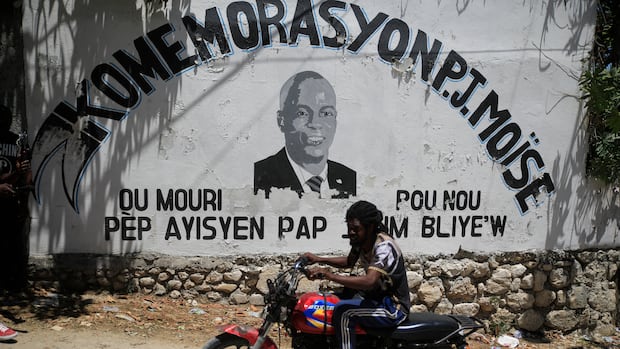
On Wednesday, a pastor from Florida who holds dual citizenship in Haiti and the United States was found guilty of charges related to the assassination of Haitian President Jovenel Moïse in 2021, an event that resulted in significant chaos in the Caribbean nation.
Christian Emmanuel Sanon was convicted on multiple counts, including conspiracy to murder Moïse, following a nearly two-month trial at a federal court in Miami. He faced a total of eight charges, with the most serious being conspiracy to kidnap or kill an individual outside of the U.S.
Sanon displayed minimal reaction upon the announcement of the verdict in the Miami federal courtroom. He could potentially receive a life sentence at his sentencing hearing scheduled for February 10. Following the trial, he was returned to a detention facility while remaining in federal custody.
After the verdict, prosecutors did not provide any comments. However, Sanon’s lawyer, Zeljka Bozanic, expressed disappointment with the jury’s ruling and indicated that the defense team plans to appeal at the appropriate time.
Since the assassination, which occurred during a nighttime raid on July 7, 2021, when a group primarily consisting of retired Colombian soldiers attacked Moïse and injured his wife at their residence, Haiti has been without a president. The nation, the poorest in the Americas, has a long history of dictatorship, political instability, and foreign interference that has continually obstructed democratic governance.
During the trial, federal prosecutors highlighted that South Florida served as a center for organizing and financing the effort to remove Moïse and replace him with a president chosen by the conspirators. They also alleged that Sanon was the initial candidate selected to take Moïse’s place. Furthermore, they claimed that he played a role in raising funds for the conspiracy and facilitated travel and accommodations for himself and others involved in Haiti.
-
American Airlines resumes flights to Haiti, providing a vital route into the country
-
Nearly 6 million people facing severe hunger in Haiti
During his testimony, Sanon admitted to having previously communicated with individuals attempting to replace Moïse but emphasized that the group had selected a different candidate long before the assassination occurred. He denied any involvement or knowledge of plans to kill Moïse.
Born in Haiti, Sanon relocated to the United States as a teenager and testified about his work with churches in Haitian immigrant communities located in Florida and the Midwest.
A general election in Haiti is set for next year to elect a new president, with candidates including Moïse’s widow, a respected economist, a well-known prosecutor facing multiple accusations of summary executions, and a former president alleged to be involved in drug trafficking and gang support.
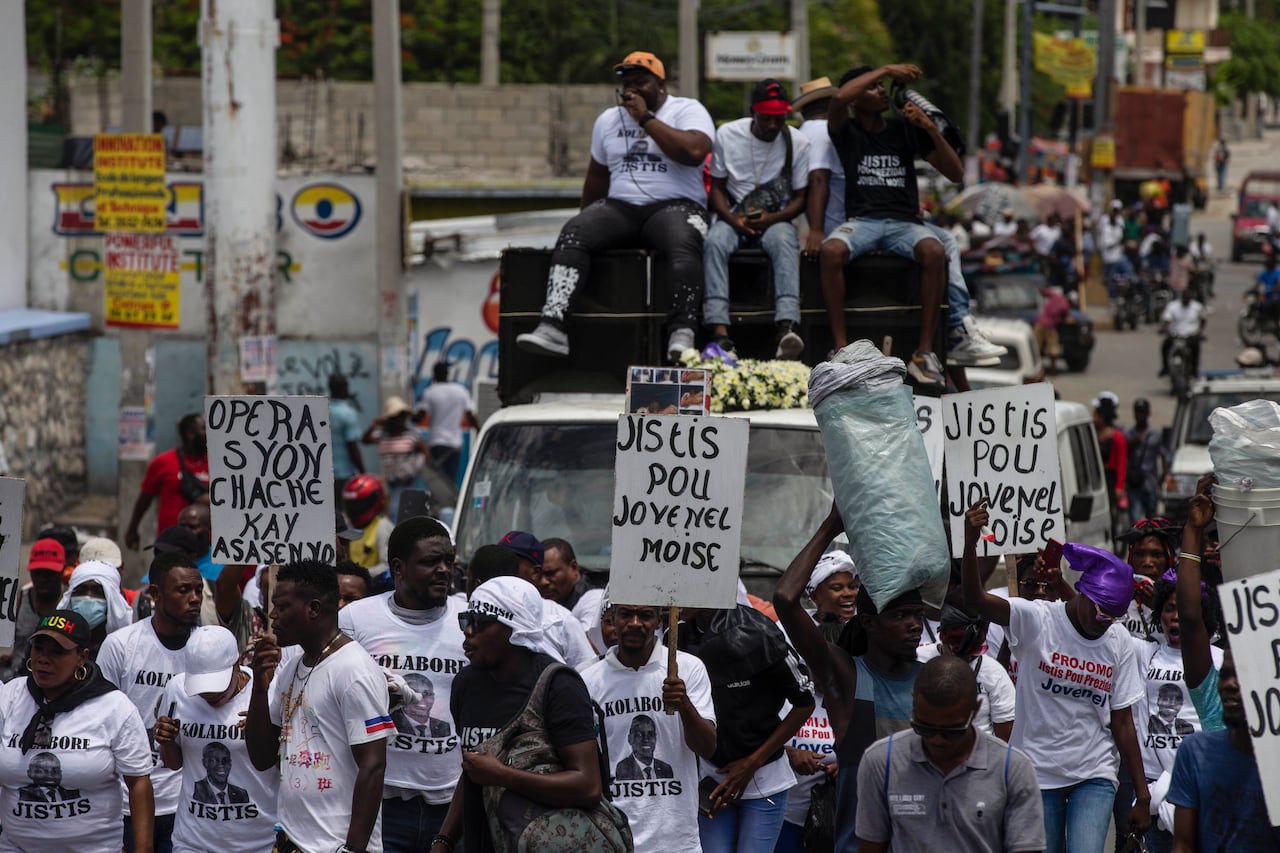
Supporters of Moïse protest for justice a year after the president’s assassination in Port-au-Prince, Haiti, in July 2022. (Odelyn Joseph/The Associated Press)
Mercenaries involved in plot: prosecutors
In the Miami trial, prosecutors indicated that the assassination conspiracy included payments to approximately two dozen foreign mercenaries funded by U.S. government programs aimed at supporting businesses during the COVID-19 pandemic, according to court documents. Over 40 individuals have been charged by U.S. prosecutors in connection with the assassination, with around a dozen having been convicted, including five currently serving life sentences.
The plan to overthrow Moïse began to take shape in April 2021 when Sanon met in South Florida with a former Haitian senator and several businesspeople from the U.S., as stated in an indictment. The group agreed that once Sanon was in power, he would provide contracts to two Florida-based companies — Counter Terrorist Unit Federal Academy and Counter Terrorist Unit Security, collectively known as CTU — for various infrastructure projects, security services, and military supplies, according to investigators.
-
El Salvador deploys hundreds of soldiers to Haiti: security official
-
At least 47 people killed in violent weekend attacks in Haiti, UN says
CTU initially recruited around 18 Colombian nationals with military backgrounds to provide security for Sanon, according to prosecutors. The conspirators also spent months procuring weapons and body armor while trying to establish connections with Haitian gangs, officials stated.
By June 2021, the conspirators recognized that Sanon lacked the constitutional qualifications and the necessary public backing to assume the presidency. As a result, they redirected their support towards Wendelle Coq Thélot, a former Haitian Supreme Court judge who passed away in January 2025 while on the run.
Sanon was originally supposed to be tried alongside four other men who were convicted earlier this year, but his case was separated and postponed due to health concerns.
In the earlier trial, Arcangel Pretel Ortiz, Antonio Intriago, Walter Veintemilla, and James Solages were found guilty of conspiracy to kill or kidnap the elected leader of the country and for providing material support for the scheme. They were also convicted of violating the U.S. Neutrality Act and face potential life sentences as well. They are currently awaiting sentencing.
Additionally, in late September, 18 individuals arrested in connection with the case were extradited from Haiti to the United States.