

A series of recent technical failures throughout the United States has impacted various sectors, including air travel, banking, and security systems. These incidents have led to speculation about whether they stem from cyberattacks, artificial intelligence (AI), or merely overdue system updates.
This troubling sequence of disruptions has impacted numerous organizations, such as Microsoft, the Federal Aviation Administration (FAA), JPMorgan Chase, the communications network of the National Security Agency, and Apple. This has prompted the U.S. government to act swiftly to reassure a public anxious about email access, banking transactions, and safe air travel.
According to these organizations, the outages were not due to cyberattacks; instead, most have been attributed to technical malfunctions.
For those puzzled by the origin of these glitches, here’s a summary of what transpired.
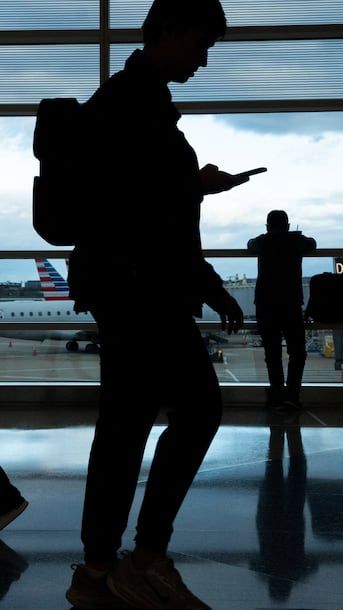
From banking and aviation to intelligence agencies, many critical services are experiencing outages in their internal and communication networks. CBC’s Katie Nicholson asks Americans for their thoughts on the situation.
Air travel
On Friday, the FAA implemented a nationwide ground stop that resulted in chaos by halting thousands of flights due to a communications failure in air traffic control that lasted nearly five hours.
This was the longest nationwide interruption of air travel in the U.S. since the September 11, 2001, terrorist attacks.
Transportation Secretary Sean Duffy stated that there was no evidence pointing to a cyberattack.
Duffy explained on Wednesday that a problem with a Juniper router installed by L3Harris Technologies in a remote facility in Arkansas “was not identified quickly enough,” and emphasized that lessons have been learned to avoid future issues.
Jay Clayton, who served as the Trump administration’s director of national intelligence, remarked during a House committee hearing on Wednesday that there was “no indication of any external threat actors or state-sponsored actors.”
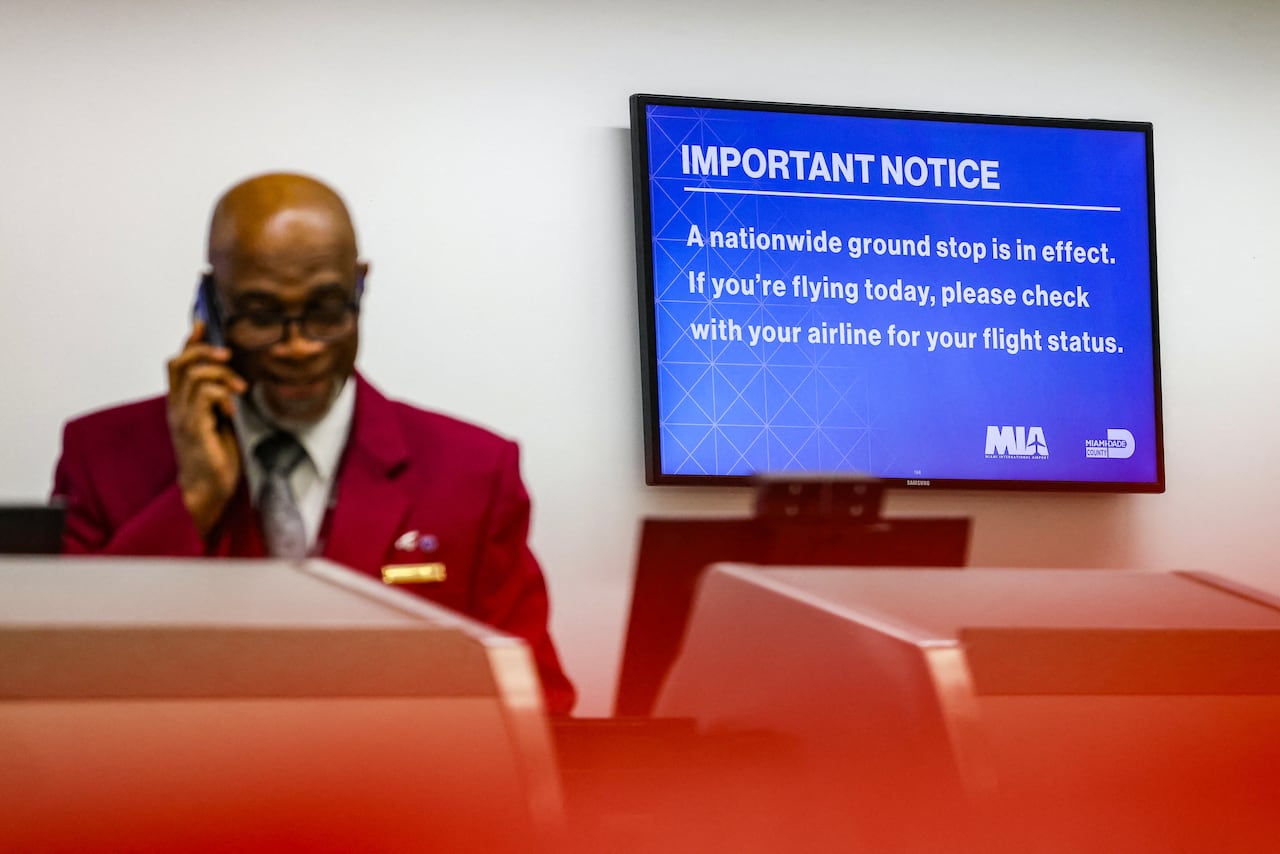
A display at Miami International Airport provides information regarding the ground stop order issued by U.S. aviation authorities on November 13. (Georgio Viera/AFP/Getty Images)
According to equity research and brokerage firm Bernstein, the ground stop and the subsequent recovery efforts cost the four largest U.S. airlines an estimated $345 million combined.
Following the ground stop, United Airlines reported that an outage causing departure delays for over 100 flights on Monday was tied to a system that calculates a plane’s final weight. The airline confirmed there was no indication of a cybersecurity issue.
While these outages may not have stemmed from cyber threats, experts suggest that the rush to fix software vulnerabilities revealed by AI may have increased the risk of flawed updates.
“We have systems like those of the FAA, which are known to be outdated and in dire need of upgrades,” noted Anne Neuberger, a general partner at the venture capital firm Andreessen Horowitz and former deputy national security adviser at the White House. “Additionally, we have a whole new set of AI attackers capable of discovering code vulnerabilities.”
Banking
JPMorgan Chase, the largest bank in the U.S., reported a software bug affecting its internal hardware systems that led to transaction delays starting on Monday.
Several customers of the retail bank, Chase, received a notification on Monday indicating, “Some services are currently unavailable. We are addressing these issues. Please try again later.”
A Chase representative stated via email on Tuesday that the issue was resolved the same day and that “transactions are now processing normally.”
Even though the disruptions occurred within days of one another, government officials and corporate leaders have asserted that the banking glitches were not related to the Microsoft or air traffic outages from the previous week.
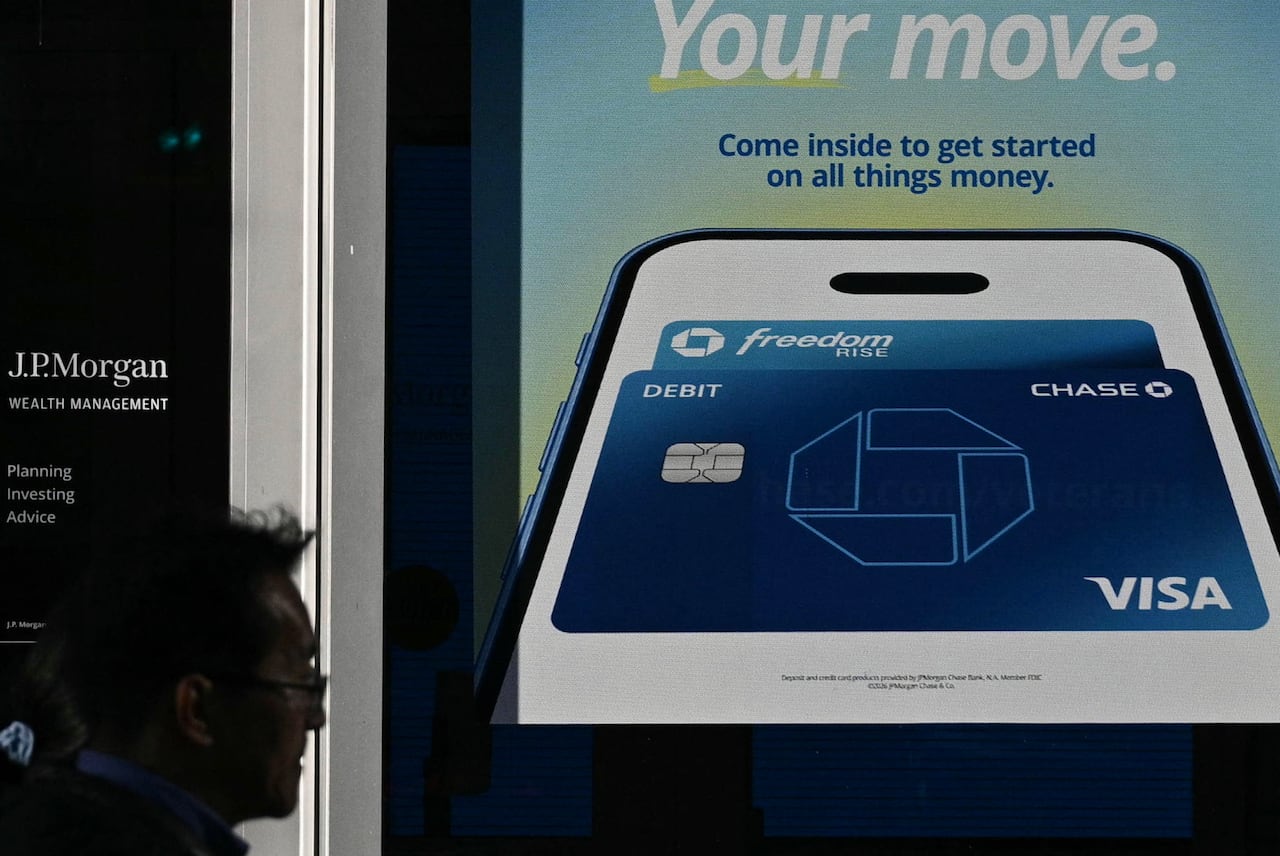
A passerby walks by a Chase bank advertisement in Washington, D.C., on Monday after reports of outages from Chase customers. (Brendan Smialowski/AFP/Getty Images)
The parent company clarified that the technical glitch was not due to a cyberattack, stressing that it was an isolated incident stemming solely from a bug.
Customers at Bank of America, Citigroup, and other banks attempting to transact with Chase may have experienced delays, despite those banks operating normally, according to a Chase spokesperson.
Although this incident was specific to Chase’s technical issues, the interconnected nature of the modern banking system means that a failure at one bank can create the illusion that other banks are affected, even if they are functioning normally.
“Even when the root cause is a technical failure rather than a cyberattack, an issue at one point in the system can disrupt transactions elsewhere,” explained Christina Powers, an expert in cybersecurity and banking at West Monroe, a digital services firm based in Chicago.
Many customers expressed their concerns on social media about the safety of their funds amid the rising number of cyber incidents. Even during outages of online banking services, the money in customer accounts remains safe and untouched, as reported by The Associated Press. The Federal Deposit Insurance Corporation insures bank deposits up to $250,000.
Email, video-conferencing, and Apple services
The tech giant Microsoft announced that the outage impacting its email and video-conferencing services last week was not due to a cyberattack or rogue AI, but rather an unspecified issue associated with what the company termed a “network capacity upgrade.”
The outage on Thursday lasted over 24 hours, significantly affecting services like Outlook, Teams, and the AI assistant Copilot.
On Saturday, the U.S.-based firm stated that services had been fully restored across Teams, Outlook, and its other platforms.
Outlook and Teams are among the most widely utilized workplace applications, serving hundreds of millions of users. The outage hindered users from performing essential tasks such as sending emails, managing schedules, and conducting virtual meetings.
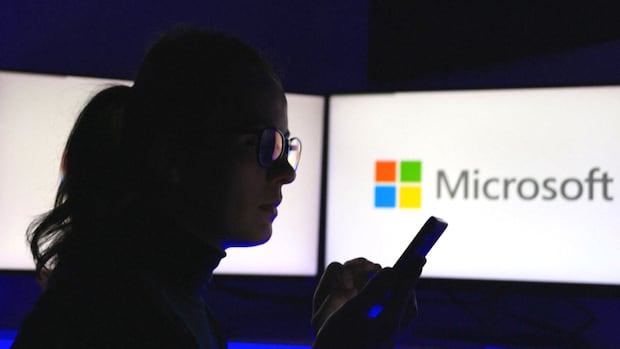
Microsoft expresses its profound apologies for the prolonged outage impacting businesses and governments globally. The software company attributes the problem to a ‘technical issue’ that has largely been resolved.
The outage affected government entities from Australia and Japan to the United States, caused delays for trading firms, hindered some companies from disclosing earnings, and led airlines to caution customers about communication delays.
Organizations running Microsoft services on their own servers rather than in the cloud faced fewer disruptions.
This outage is one of the longest recorded in Microsoft’s history and marks the second instance of service disruption for the year.
On Tuesday, Apple announced its efforts to restore systems following an internal update that caused an outage affecting customer services like iCloud and Apple Pay.
Apple confirmed that the issue was not a result of a cyberattack.
National Security Agency
An internal network utilized by the National Security Agency for classified communications was offline on Tuesday due to what the agency termed “temporary degradation” during “routine maintenance.”
The issue disrupted NSANet, a classified internal network for agency employees, as per a defense official who spoke to The Associated Press on condition of anonymity.
-
Expert says Canada-wide flight grounding unlikely
-
United Airlines reports resolution of issue affecting departing flights
“While some internal systems experienced disruptions, mission-critical functionalities remain fully operational, and our capability to protect national security persists,” stated the NSA.
“NSA’s infrastructure is designed with multiple layers of redundancy to ensure operations continue during planned maintenance or unexpected events.”
The intelligence agency did not disclose further details regarding the cause of the outage or the extent of the disruption.