
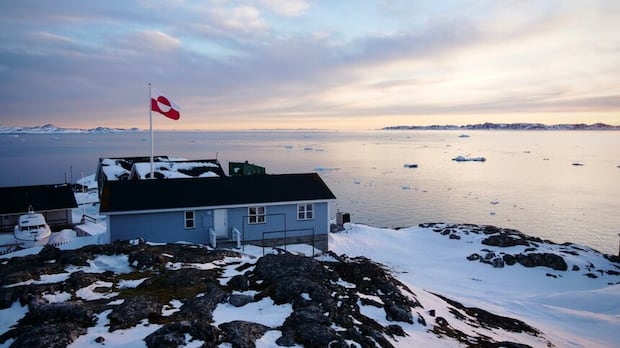
Top diplomats from Denmark and Greenland are receiving acclaim for their handling of U.S. President Donald Trump’s repeated threats to acquire the Arctic island. Despite Trump’s recent escalation in rhetoric, declaring anything less than U.S. control of Greenland as “unacceptable,” the foreign ministers of Denmark and Greenland presented their case in Washington calmly and logically, firmly rejecting the president’s territorial ambitions.
Danish Foreign Minister Lars Løkke Rasmussen, at a press conference on Wednesday, acknowledged the notable public statements regarding Greenland and Arctic security. He emphasized the contrast in positions between the president’s desire to conquer Greenland and their differing stance.
Denmark, a NATO member, and Greenland, its semi-autonomous Arctic territory, are now navigating diplomatic challenges with the sometimes undiplomatic Trump administration. Analysts like Liana Fix from the Council on Foreign Relations suggest two approaches in dealing with Trump: showing strength to compel him to back down or eventually making concessions due to U.S. power.
In response to the Greenland threats, Denmark and its European allies have adopted a strategy combining de-escalation through dialogue while also deterring the United States. This dual approach aims to reduce tensions while conveying a strong message of opposition to U.S. control aspirations.
Several NATO countries, including France, Germany, Norway, the U.K., and the Netherlands, have deployed a small number of troops to Greenland, underscoring the strategic importance of the region. This move reinforces the message that Greenland is a territory belonging to a NATO member, emphasizing the region’s significance to European security.
The Danish-Greenlandic diplomatic efforts in Washington, including meetings with top U.S. officials, emphasized that U.S. control of Greenland is a “red line” that should not be crossed. They highlighted existing agreements allowing U.S. military presence on the island and proposed collaboration on Arctic security with enhanced Danish and NATO forces in Greenland.
Experts commend the well-coordinated diplomatic efforts of Denmark and Greenland, noting the careful planning that led to successful engagements in Washington. By demonstrating unity on the issue of American control of Greenland, the diplomatic team has effectively conveyed a message of strength and solidarity to counter potential threats.
Legislative actions, such as bills proposed by bipartisan groups in Congress, aim to prevent military actions against NATO members without Congressional approval and explicitly prohibit the use of military resources to seize control of a NATO member’s territory. The alignment between Greenland and Denmark on this issue further strengthens their position and deters potential exploitation by external actors.