
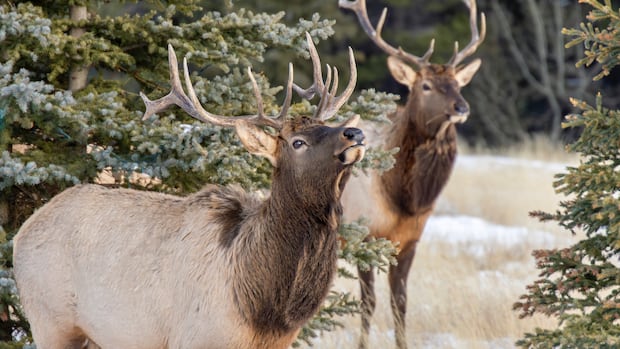
Amidst vibrant orange larch trees in the Bow Valley, a distinct cry reverberates through the air. As the autumn mating season progresses, male hoofed mammals across North America are vying for the opportunity to breed.
Among these creatures are elk, commonly found throughout much of Alberta. During this time of year, it is not unusual to witness and hear bull elk asserting their dominance in the Canadian Rockies.
Recent research from the United States suggests that elk in different regions may actually communicate using distinct dialects. Jennifer Clarke, a biology professor at the University of La Verne in California, conducted a study on elk populations in Colorado, Pennsylvania, and Wyoming.
Clarke explained that these populations have been isolated for extended periods, leading to unique communication patterns similar to human populations separated over time. The bugling calls of bull elk serve as signals of aggression and readiness to challenge other males for breeding rights.
Furthermore, the bugle calls can also convey information about an elk’s age and size, with younger bulls emitting higher-pitched sounds compared to older, dominant males.
The differences in regional elk dialects were initially thought to be influenced by habitat variations among the studied states. However, the data did not support this hypothesis. Clarke mentioned that genetic factors or learning processes may be responsible for the distinct dialects observed.
In Pennsylvania, where elk inhabit dense forests, their calls were expected to be lower-pitched for better sound transmission. Surprisingly, all three populations studied exhibited highly unique bugle calls, indicating that habitat alone does not drive the dialect differences.
While the exact reasons behind the regional dialects remain unclear, Clarke emphasized the need for further research to explore the role of genetics and other factors in shaping elk communication patterns.
As the elk rutting season unfolds in the Canadian Rockies, caution is advised due to the aggressive behavior of bull elk during this period. A study on wildlife encounters in Canadian national parks revealed that elk were involved in a significant portion of aggressive encounters.
Nick de Ruyter, program director of the BioSphere Institute’s WildSmart program, highlighted the importance of giving elk space and avoiding close encounters, especially in areas where elk are commonly sighted. People are urged to maintain a safe distance from elk to prevent triggering aggressive reactions, particularly during the rutting season.
For safety, it is recommended to keep a distance of at least 30 meters from elk on trails, which should be increased to 100 meters during the rutting season. Visitors are advised to be cautious, keep dogs on-leash, and carry bear spray, which can also deter elk if needed.