
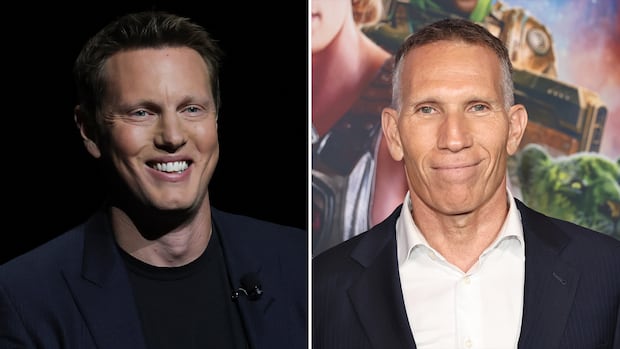
Skydance-owned Paramount has successfully finalized its acquisition of Warner Bros. Discovery for $81 billion in the United States. This merger has formed a new entertainment powerhouse known as “Skydance.” The consolidation now brings together two of America’s most established film studios, encompassing a wide range of popular titles and networks like CNN, HBO Max, Paramount+, CBS, “Top Gun,” and “The Godfather” under one umbrella.
Billionaire David Ellison, along with the newly appointed co-CEO Ynon Kreiz, formerly of Mattel, will now oversee these entertainment entities, further consolidating power in the industry dominated by a few major players. Ellison has indicated plans to eventually merge Paramount+ and HBO Max into a single streaming service. However, current licensing agreements in Canada, where HBO content is exclusively available through Bell Media on Crave, may keep the streaming landscape unchanged for the foreseeable future.
Despite potential consolidation in the U.S., Stephen Zolf, a partner at Aird & Berlis law firm in Toronto, suggests that merging streaming services may not be financially viable in Canada due to its smaller market size. While streaming service access may remain constant, price increases are anticipated as companies strive for profitability and manage debt post-merger.
As part of the settlement agreement with U.S. states opposing the merger, Paramount has committed to releasing a minimum of 30 films annually for the next two years, with theatrical distribution. Subsequently, the company plans to release 32 films per year for the following three years, with at least 50% being produced or jointly produced by the combined entity. This move has raised concerns among advocates of independent cinema, foreseeing a potential decline in diverse film offerings following the initial commitment period.
The increased film production pledge by Paramount may not necessarily translate into more opportunities for Canadian film industry professionals. Moreover, the company aims to boost film production spending in the U.S. by an additional $1.5 billion over the next five years. Reports suggest that cost-saving measures, including job cuts, are on the horizon, potentially impacting the North American film production landscape.
The Hollywood community has exhibited mixed reactions to the merger, with some personalities expressing apprehension over potential job losses and reduced content diversity. Notably, U.S. President Donald Trump has been vocal about his discontent with CNN’s coverage, advocating for new ownership. Despite assurances of editorial independence, skepticism remains regarding the future direction of CNN under the combined company’s control.
The Ellison family’s close ties with Trump have raised eyebrows, especially given their interactions surrounding key merger events. The relationship dynamics between prominent figures in the entertainment industry and political spheres continue to draw attention and speculation.