
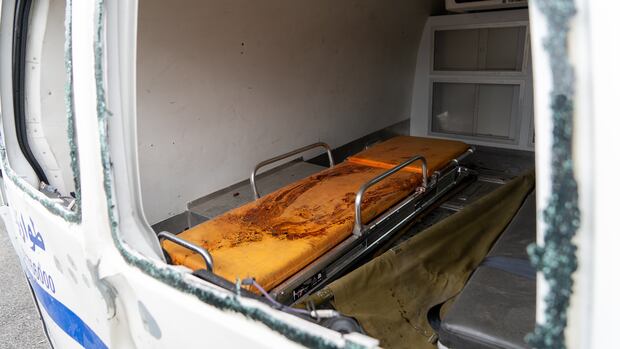
Ali Mouallem has likely watched the video of his ambulance being struck by an Israeli missile many times. However, when he shared it with a CBC News team in Nabatieh, his hands trembled. Mouallem, 26, emphasized that the ambulance carried only civilians and paramedics engaged in humanitarian work, refuting Israeli allegations of paramedics aiding Hezbollah. On April 15, one day before a ceasefire agreement between Hezbollah and Israel, Mouallem and his team faced a deadly situation resulting in the loss of four paramedics.
As the day unfolded, Mouallem’s colleague, Fadel Hamadi, acknowledged the escalating risks faced by paramedics in south Lebanon. There were reports of Israeli attacks on civil defence and ambulance teams responding to emergencies. Hamadi equipped himself with a GoPro camera to document events and counter Israeli accusations of paramedics misusing their status. The strike on their team was viewed as a deliberate targeting of paramedics, challenging IDF claims.
The tragic incident involved a series of strikes, including what media and officials described as a “quadruple tap,” a severe escalation in military tactics. The strike resulted in casualties, with paramedics being directly targeted. Mohammad Sleiman, the chief paramedic in Nabatieh, experienced the loss of his 16-year-old son, Joud, in a previous attack, highlighting the dangers faced by paramedics in the region.
Following the recent deaths, the Nabatieh ambulance team released a video of the strike online, aiming to disprove IDF claims about ambulances being used for military purposes. The team’s footage and commentary aimed to show the genuine nature of their humanitarian work. The incident raised concerns about potential war crimes and emphasized the importance of protecting medical teams in conflict zones.
Despite the challenges, paramedics and civil defence workers in Lebanon remain dedicated to their duties, even amidst ongoing conflict. The ceasefire’s sustainability remains uncertain, but these brave individuals continue their work, honoring their fallen colleagues and ready to respond to emergencies.