
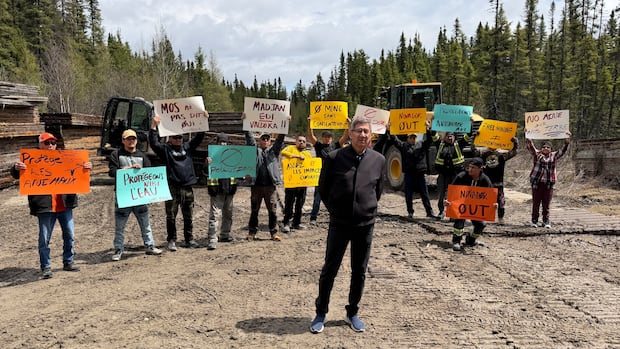
In a region of Quebec’s Abitibi-Témiscamingue with a history of mining activities, plans for a multi-pit gold mine have raised concerns among members of the nearby Anishinaabe First Nation. Community members recently gathered at the proposed project site on ancestral land, close to Lac-Simon, to demand a halt to exploratory work. Signs expressing opposition to the project and highlighting environmental worries were prominently displayed.
Chief Lucien Wabanonik of the Lac-Simon Anishinaabe Nation voiced reservations about the potential impact of new open-pit mines on the land. He emphasized the lack of proper consultation and the community’s decision to reject large-scale projects like the open-pit mine proposed by Probe Gold, now owned by Fresnillo.
The Novador project, touted as one of Canada’s significant undeveloped gold projects by the company, is projected to yield an average annual gold production of 255,000 ounces over a 12.6-year mine life. The project’s proponents argue that it would bring socio-economic benefits to the region, creating 550 jobs and necessitating infrastructure like an ore processing plant, access roads, and ponds within a 200-square kilometre area already impacted by past mining activities.
Concerns raised by Lac-Simon residents include potential threats to the local ecosystem, particularly the watershed, and endangered species like the woodland caribou. Critics argue that the approval process for mining projects in Quebec is flawed, with recent legislative changes requiring companies to consult with affected communities before conducting impact-causing exploration activities.
Despite community opposition and advocacy efforts, the regulatory process often results in mining projects moving forward without addressing community concerns adequately. A recent report highlighted deficiencies in how the law is enforced, indicating a lack of effective oversight in balancing environmental protection and mining interests.
Legal experts and advocates stress the need for meaningful community involvement in decision-making processes, rather than merely reacting to pre-determined outcomes. The Anishinaabe community remains steadfast in its opposition to the Novador project and is prepared to pursue legal action if necessary.
The Ministry of Natural Resources and Forests in Quebec confirmed granting a permit to Fresnillo for exploratory work, with plans for further consultations during the Environmental Impact Assessment phase. The company expressed readiness to engage with community representatives and reiterated its commitment to ongoing dialogue, while maintaining that the open-pit mine remains the only feasible option according to the project proposal document.
In response to the growing discontent, the Anishinaabe community is exploring legal avenues to challenge the project if their concerns are not addressed through dialogue and consultation processes.