
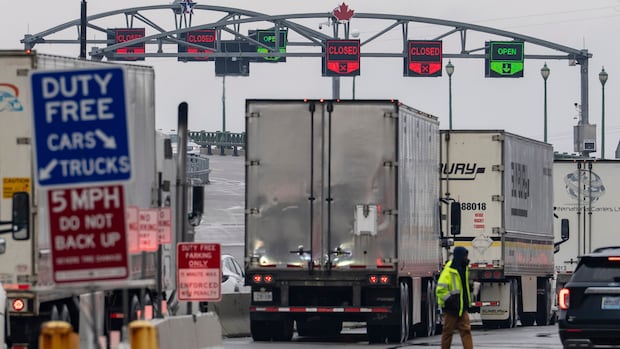
Enforcement of cross-border cargo regulations has significantly increased during the Trump administration, causing delays and financial burdens for shippers. According to industry experts, there has been a surge in freight screening and penalties, reflecting a more protectionist stance by the United States on customs matters.
Breanna Leininger, who oversees U.S. operations at Pacific Customs Brokers in Vancouver, described the substantial shift in customs requirements. She noted a tenfold increase in the documentation demanded by border officials for the goods being transported compared to previous years. The scrutiny on product classifications and trade agreements has led importers to provide extensive paperwork, including labor and manufacturing records, to demonstrate compliance.
The evolving demands of customs officials have led to a continuous adjustment in the proof and documentation needed, making it a challenging environment for businesses sending products across the border. Statistical data supports the narrative of heightened enforcement, with audits by U.S. Customs and Border Protection projected to increase by 26% from the previous year.
In the first half of the current year, U.S. customs authorities collected $70.6 million US in trade penalties, marking a significant surge compared to previous years. These enforcement measures coincide with a trade war escalation between Canada and the U.S., resulting in additional delays and costs for businesses involved in cross-border commerce.
Alan Dewar, the executive vice president of GHY Customs Brokers in Winnipeg, highlighted the substantial financial implications of these enforcement actions on businesses. The increased scrutiny and delays at the border have led to additional costs for transportation, storage, and potential spoilage of goods.
While some businesses have managed to navigate these challenges, others have found the regulatory landscape too complex to continue operations smoothly. U.S. Customs and Border Protection emphasized that importers are responsible for providing accurate information and complying with customs requirements.
The changing trade dynamics and stricter enforcement measures are creating a complex environment for cross-border trade, impacting businesses on both sides of the border.