
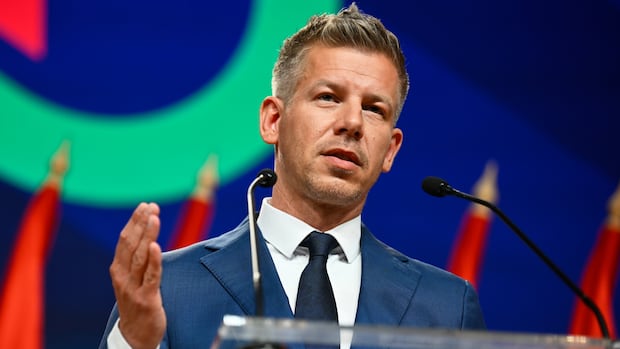
European Union Commission President Ursula von der Leyen praised Hungary’s recent election outcome as a significant win for basic freedoms. She drew parallels between the removal of nationalist leader Viktor Orbán and Hungary’s historical moments of defiance against Soviet rule in 1956 and the transition from communism in 1989.
The election results, which saw a resounding victory for the center-right opposition led by Péter Magyar, were described as a political earthquake that resonated globally, from Washington to Kyiv, transforming Budapest into a jubilant celebration. Von der Leyen commended the Hungarian people for their courage and determination, likening their resolve to the pivotal events in their nation’s history.
Orbán, a staunch ally of Russian President Vladimir Putin within the EU, had been known for his confrontational stance towards both the EU and NATO, impeding efforts to support Ukraine amid its conflict. His recent actions, including blocking a substantial EU loan to Ukraine, strained relations in the region.
Following the election, Magyar, who had ties to Orbán’s party in the past, emphasized Hungary’s decision to embrace a pro-European direction, marking a significant shift in governance. He emphasized the country’s reaffirmation of its place within the European community.
Despite the change in leadership, Magyar clarified that his government would not actively push for Ukraine’s swift accession to the EU. He expressed willingness to engage in constructive dialogue with Putin, advocating for an end to the ongoing conflict and bloodshed.
Orbán, a divisive figure known for his nationalist policies and consolidation of power, faced criticism for his authoritarian tendencies and controversial reforms during his tenure. Magyar’s coalition’s supermajority in parliament positions them to enact constitutional changes, including limiting the prime minister’s terms in office.
Notable world leaders, including British Prime Minister Keir Starmer and French President Emmanuel Macron, extended their congratulations to Magyar following the election outcome. The victory was hailed as a triumph for democracy by former U.S. President Barack Obama, echoing sentiments of resilience and democratic progress.
While the win was well-received by liberal and moderate factions globally, it contrasted with the previous support Orbán received from the U.S. administration, notably from figures like Vice President JD Vance and Secretary of State Marco Rubio. The transition in leadership prompted varying reactions from international leaders, with some expressing hope for continued cooperation and stability in the region.
The outcome of the Hungarian election reflects a significant political shift in the country, with implications for its future trajectory within the European landscape.