
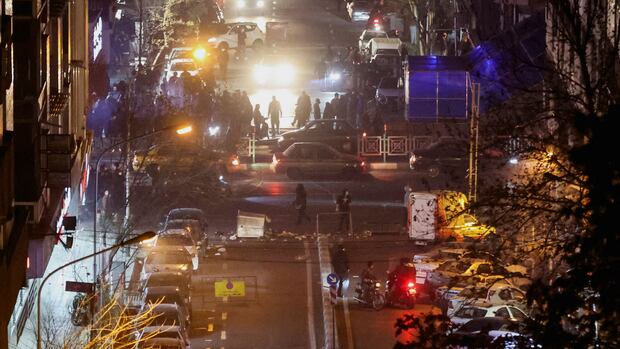
Erfan Soltani, a 26-year-old man from Iran, has been given a death sentence in the country, as reported by human rights organizations. This development coincides with widespread protests in Iran and a violent government crackdown.
Soltani’s case is attracting attention as potentially marking the first death penalty in the recent wave of demonstrations against the Iranian leadership headed by Supreme Leader Ayatollah Ali Khamenei. Reports have emerged of law enforcement officers firing into groups of protesters, resulting in a death toll of at least 2,003 individuals, according to the U.S.-based Human Rights Activists News Agency. An Iranian state official also revealed to Reuters that approximately 2,000 people had lost their lives.
According to reports, individuals fell to the ground where they stood, as recounted by a witness to the BBC. Iran Human Rights, a non-profit organization based in Norway, disclosed that Soltani’s family was notified on Monday of his arrest in Fardis, a city to the west of Tehran, on January 8, and subsequent death sentence. The organization cited a source close to the family, mentioning that the sentence was scheduled for execution on Wednesday without a formal trial, with the specific charges against Soltani remaining unclear.
Expressing deep apprehension over the continuing violence against protesters, Iran Human Rights urged the international community to act promptly to prevent potential mass executions. Authorities in the Islamic Republic have labeled demonstrators as “mohareb” (a legal term meaning “war against God”), terrorists, and instigators, associating them with Israel and the United States, acts deemed punishable by death.
The protests initially sparked over frustrations with Iran’s struggling economy, evolving swiftly to challenge the existing theocratic regime, particularly targeting Ayatollah Khamenei. Another rights group based in Norway, Hengaw, revealed that Soltani’s sister, a lawyer, had been denied access to her brother’s case file.
Since his detention, Soltani has been denied essential rights, including legal representation, defense, and other fundamental due process rights. His family has been kept uninformed about the legal proceedings, with just one final visit permitted before his scheduled execution. U.S. President Donald Trump took to Truth Social to announce the cancellation of planned meetings with Iranian officials until the violence against protesters ceased, without specifically referencing Soltani’s case.
In response, top Iranian security official Ali Larijani accused President Trump and Israeli Prime Minister Benjamin Netanyahu of being responsible for the deaths of Iranian citizens. Professor Mohamad Tavakoli-Targhi from the University of Toronto criticized Trump and Netanyahu’s statements for potentially undermining the protesters’ cause by allowing the regime to portray them as foreign agents.
Tavakoli-Targhi emphasized the significance of Iranian sovereignty amid the protests, highlighting the political debate on whether Iran should maintain independence from external influences. He noted that previous U.S. actions, such as Trump’s comments on regime change and historical CIA interventions, had complicated the situation. The expert observed parallels between the current protests and past revolutionary movements, including the 1979 Islamic Revolution in Iran, but noted a lack of internal fractures within the current Iranian government or military, which are typically crucial in successful revolutions.