
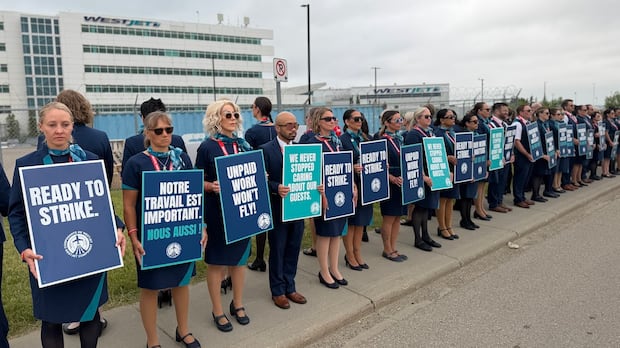
WestJet, the second-largest airline in Canada, is making preparations to gradually reduce its operations in anticipation of a potential strike or lockout by its flight attendants. However, the implementation of this plan does not indicate an inevitable labor dispute, as negotiations between the union and the airline are still ongoing.
In a communication obtained by CBC News, WestJet’s vice-president of inflight operations, Robert Antoniuk, clarified that the agreement to wind down operations does not signal a move towards labor action, but rather outlines a contingency plan in case negotiations with the CUPE WestJet Component do not succeed.
Federal mediators are actively engaged in the negotiation process, as confirmed by federal Transport Minister Steven MacKinnon. He expressed optimism about the progress of the talks and hopes for a mutually agreed-upon resolution.
According to John Gradek, an industry expert and faculty lecturer at McGill University, it is standard practice for airlines to have contingency plans in place to manage operations in the event of a potential labor dispute. Preparatory measures are necessary to ensure that aircraft and crew members are not stranded in other locations if operations need to be suspended.
While no flight cancellations have been announced by WestJet in connection with the labor negotiations, the airline has offered to waive cancellation or change fees for passengers traveling between July 30 and August 4. However, passengers may only receive credits for future travel with WestJet.
The CUPE WestJet Component, representing approximately 4,400 union members, could initiate a strike by August 2 if a resolution is not reached. One of the key issues in the negotiations is the compensation for the time spent by flight attendants on duty, with the union advocating for fair remuneration for all hours worked.
The dispute centers around the pay structure for flight attendants, where hours worked are compensated based on a set amount of “credit hours” that may not account for all duties performed. While WestJet argues that its current pay model aligns with industry standards, the union insists on fair compensation for all work hours.
This disagreement echoes similar disputes in the airline industry, such as the one between Air Canada and its flight attendants in the past. The resolution of such issues often involves a combination of government intervention, arbitration, and negotiation to reach a mutually acceptable agreement.
WestJet’s previous experience with labor disputes, notably in 2024 when unionized airline mechanics went on strike, underscores the potential impact of such conflicts on both the airline and its passengers.