
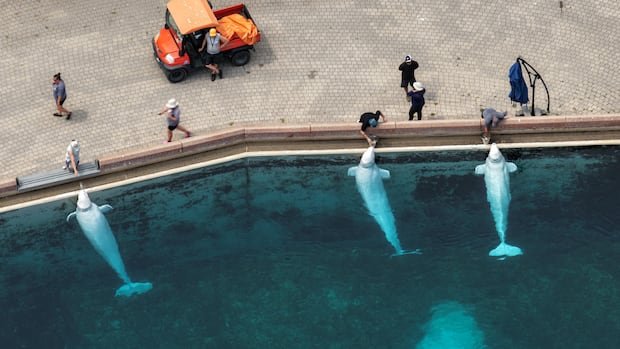
Earlier in the current month, a proposal was endorsed by the national government that may lead to the relocation of the 30 beluga whales from the now-closed Marineland in Niagara Falls, Ontario, to international destinations. Due to a law implemented in 2019 in Canada prohibiting the keeping of whales, dolphins, and porpoises for breeding or entertainment purposes, the belugas will likely be distributed among an aquarium in Spain and four in the United States.
The challenge lies in transporting these aquatic creatures, which can reach lengths of up to 4.5 meters and weigh as much as 1,900 kilograms. Although specific details from the destination aquariums managing the rescue operation are not yet available, insights were gathered from experts experienced in the complex process of whale transportation.
Step 1 involves acquiring the necessary permits from the Canadian government and the recipient countries for the belugas to be moved. The animals’ destinations will be determined based on factors such as their individual personalities, as assessed by veterinarians through health evaluations and bloodwork before travel. While initial approval has been granted by Ottawa, further logistical arrangements and permits are required before the relocation can proceed.
Trainers typically spend months acclimating belugas to the equipment used to transfer them, such as custom-made slings and stretchers. The animals are encouraged to familiarize themselves with the equipment before being lifted out of their tanks on the day of transport. The process varies depending on each whale’s temperament, with some taking a couple of months to adjust to the sling.
During transport, the belugas are lifted out of their tanks using slings and placed in custom transport crates equipped with enough water for submersion but not excessive sloshing. The crates are designed to minimize external noise and ensure the animals’ comfort during the journey. The transport crate is then moved by truck to a cargo plane, accompanied by a team of trainers and veterinarians monitoring the belugas’ well-being throughout the flight.
Upon arrival at their new facilities, the belugas will undergo quarantine to confirm their health status and prevent the spread of diseases. Trainers will share insights about the animals’ behaviors to aid in their transition to new caregivers. Releasing the belugas into the wild is deemed impractical due to their captivity origins and lack of survival skills, making it challenging for them to integrate into native populations.
In conclusion, the intricate process of relocating the beluga whales from Marineland underscores the meticulous planning and care required to ensure their safe and humane transfer to new homes.