
The Fairmont The Palm, a luxurious five-star hotel on Dubai’s manmade archipelago, was struck by debris from an Iranian missile interception on February 28. This incident not only breached the country’s advanced missile defense system but also tarnished its reputation for security. The United Arab Emirates has long been known as an economic and cultural hub bridging European and Asian markets.
Stephen J. Fallon, a political analyst with experience living in the UAE, highlighted the impact of the recent events, stating that the country’s image of stability amidst surrounding chaos has been shattered. The Emirates has been a beacon for millions of expats attracted by its pristine streets and iconic skyscrapers rising from the desert landscape.
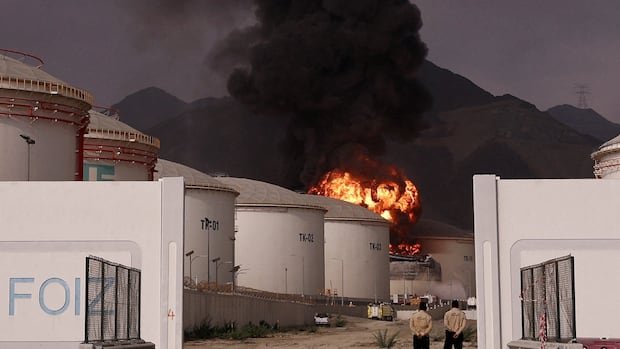
The UAE, with a population mainly comprised of expatriates, has faced unprecedented challenges following retaliatory strikes by Iran in response to U.S. and Israel operations that targeted Iran’s Supreme Leader. Residents like Rashad-Asaad Masri, who relocated from Lebanon seeking a more secure future, expressed shock at the recent attacks. The country has been a target for Iranian missiles and drones, causing casualties and damage, including a fire near the U.S. consulate.
Despite the ongoing conflict, life in the UAE appears relatively normal for now, as observed by locals like Alexander Debare and Masri. The country’s defense systems have intercepted a significant number of missiles and drones, but concerns linger about sustainability in a prolonged conflict. International efforts are underway to evacuate citizens from the UAE due to ongoing security threats.
While the UAE has robust defense mechanisms, analysts caution that continued conflict could impact its reputation as a safe haven for residents and investors. Fallon suggested that the Gulf states, including the UAE, have faced the brunt of military actions, raising questions about their role in the broader geopolitical landscape.