
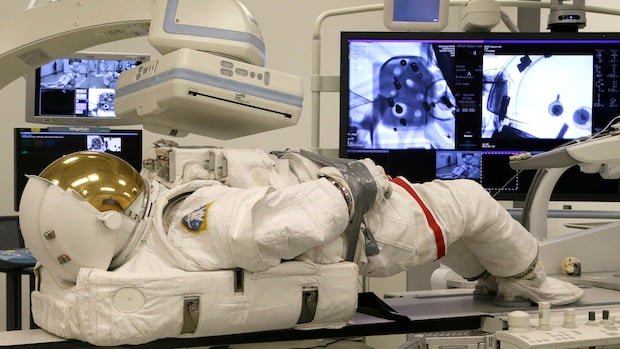
Advancements in medical technology, such as ear thermometers and portable ultrasounds that connect to smartphones, have roots in space technology. Experts believe that upcoming deep space expeditions will introduce novel healthcare innovations to Earth, including portable medical devices and robotic assistance. These innovations are expected to offer significant benefits to remote and underserved communities.
Dr. Dave Williams, a former ER physician and astronaut from Toronto, highlights the potential transferability of lessons learned from lunar habitats to delivering remote medical care in regions like northern Canada. Meanwhile, Dr. Farhan Asrar, an associate dean at Toronto Metropolitan University’s medical school, along with other researchers, are exploring health-related innovations related to deep space missions heading to the Moon and eventually Mars.
As deep-space missions become longer and further from Earth, the need for faster communication technologies to enable virtual healthcare becomes essential. Additionally, advancements in robotics and artificial intelligence (AI) will be crucial for providing timely care to astronauts. Wearable technologies that monitor vital signs, robotic limbs, and exoskeletons are also being developed to support individuals at risk of falling or with disabilities.
The interplay between space medicine and terrestrial medicine drives mutual advancements. Portable medical technology is crucial in space due to limitations on carrying heavy equipment, and these innovations can also benefit healthcare providers in remote areas and disaster zones on Earth. Astronaut David Saint-Jacques emphasizes the similarities between providing healthcare to isolated communities on Earth and astronauts in space, stressing the importance of adapting to limited resources and challenging circumstances.
While space innovations have implications for Earth, new tools and medicines are typically developed and tested for terrestrial use before being utilized in space. Organizations like the Canadian Space Agency prioritize technologies that offer benefits both in space and on Earth to optimize resource allocation. Although innovations in robotics and automated healthcare are progressing, challenges such as costs and regulatory processes can delay their implementation on Earth.
Despite these challenges, ongoing missions like Artemis II are driving enthusiasm and accelerating innovation in healthcare technology. Dr. Tarek Sardana believes that the success of these missions will inspire more medical professionals to pursue training in aerospace medicine and encourage young talent to enter the field, fostering further advancements in healthcare technology.