
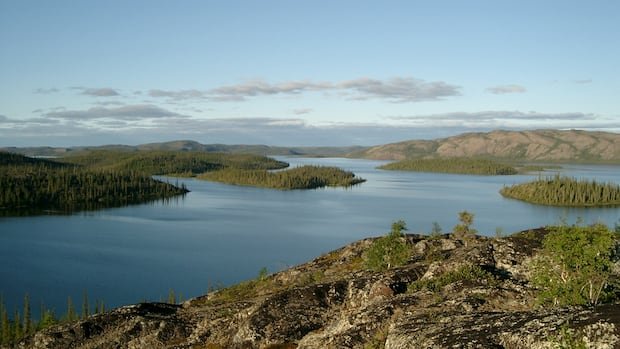
A recent study suggests that climate change has brought significant alterations to the algae population in the Great Bear Lake in the Northwest Territories. The research, recently published in the Proceedings of the National Academy of Sciences (PNAS) journal, points out that the increase in ice-free days and rising air temperatures has led to a rapid restructuring of the algal community in large northern lakes like Great Bear.
John Smol, a biology professor at Queen’s University and co-director of the Paleoecological Environmental Assessment and Research Lab (PEARL), highlighted the necessity for further investigation to understand the implications for the creatures dependent on algae as a food source and the broader food chain dynamics. He mentioned that with reduced ice cover, there could be more total algae present, but the specific changes in algae types raise uncertainties.
Analyzing sediment layers from core samples extracted from various locations in Great Bear Lake enabled the researchers to track environmental changes across different time frames. Comparisons with studies on Lake Hazen and Great Slave Lake in the N.W.T. revealed a shift in the algae species composition towards those thriving in open water, departing from the shallow-water varieties typical of ice-covered lakes.
Despite the immense size of these lakes, comparable to the land area of Belgium, the study noted surprising transformations in recent years. Reid Stoyberg, an environmental scientist with experience as a fishing guide on Great Bear Lake, acknowledged the study’s findings but emphasized the need for more data before drawing definitive conclusions on the lake’s ecosystem health.
Stoyberg underlined the importance of continuous research to monitor potential impacts on species like ciscoes and baitfish due to the changing algae dynamics. He emphasized the necessity for adaptive responses from species in the harsh environment of Great Bear Lake, where any alteration can disrupt the delicate balance of its ecosystem.