
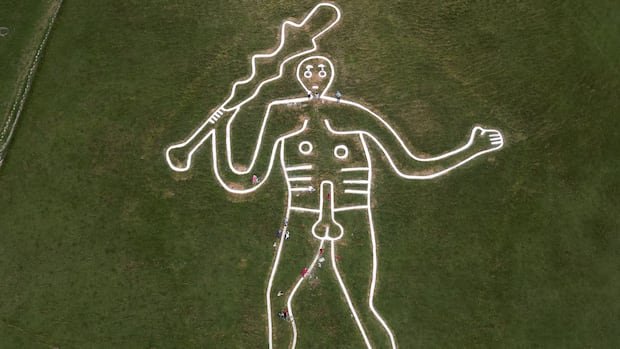
The residents of Cerne Abbas have a deep affection for the iconic naked, club-wielding giant engraved on the Dorset hillside. Due to recent mild, damp winters, the 55-meter chalk figure has become overgrown with grass and algae, prompting over 100 volunteers from the U.K.’s National Trust to embark on the challenging task of restoring the Cerne Abbas Giant to its former splendor.
Liz Flight, the National Trust’s senior visitor experience officer, described the painstaking effort required to rejuvenate the beloved figure, emphasizing the laborious nature of the work carried out by the dedicated volunteers amid sweltering conditions.
The origins of the giant, known as “The Old Man” or “The Rude Man,” have long been shrouded in mystery. Initially believed to be from ancient Roman times, a 2001 National Trust analysis revealed that the figure actually dates back to the late Saxon period, between 700 and 1100 AD.
Flight highlighted the continuous maintenance efforts by the National Trust to preserve the country’s hill figures, noting that the Cerne Giant undergoes touch-ups approximately every decade to prevent frequent re-chalking, which could harm the landscape and archaeological features beneath the figure.
This restoration marks the fourth re-chalking of the Cerne Giant, occurring earlier than scheduled due to successive warmer winters promoting grass and algae growth, causing the figure’s appearance to fade. Volunteers are diligently removing vegetation, clearing old chalk deposits, and replenishing the figure with fresh white rocks, with the completion timeline subject to weather conditions.
Despite the physical demands of the task, Flight expressed satisfaction in contributing to the preservation of the Cerne Giant, emphasizing its cultural significance and the community’s dedication to keeping the iconic figure pristine on the hillside.