
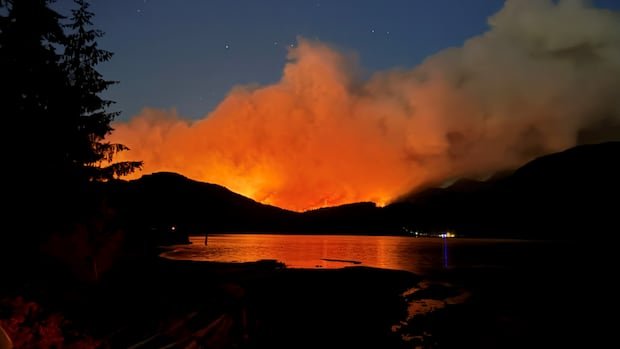
Wildfire season in Canada may begin quietly, but experts warn that ongoing drought and a warm summer could lead to another severe year. Wildfire specialist Mike Flannigan views this year as a crucial test to determine if Canada’s wildfire seasons, impacted by human-induced climate change, have shifted into a new norm of heightened severity.
While precise predictions for the upcoming wildfire season are challenging in April, certain indicators hint at potential risks. Concerns arise as parts of Canada, such as British Columbia’s southern Interior, northern Manitoba, and eastern Northwest Territories, have already faced abnormally dry or drought conditions. Forecasts suggest above-average temperatures across much of the country in the months ahead, with El Niño expected to influence conditions.
Despite some regions showing signs of heightened wildfire susceptibility, a snowy winter has left a substantial snowpack in many areas, particularly in the northern regions. While parts of southern B.C., southern Alberta, and southwestern Saskatchewan have experienced conditions conducive to wildfires, other regions like New Brunswick, Hudson Bay, and eastern Northwest Territories face drought concerns.
The recent trend of severe fire seasons in Canada can be attributed to accelerating climate change, leading to longer and more intense wildfire periods. Climate change-induced factors such as increased heat waves, droughts, and extreme wildfire behavior contribute to the escalating wildfire risks. Moreover, managed forests in Canada have begun releasing more carbon than they absorb, fueling a detrimental climate feedback loop.
The impact of wildfires extends beyond the immediate fire zones, affecting public health and the economy. Smoke exposure poses health hazards, with studies estimating significant health and economic repercussions due to wildfires. Evacuations during wildfire seasons have led to high rates of post-traumatic stress among affected individuals.
To mitigate wildfire risks, vigilance and responsible behavior are crucial. As snow melts and dry vegetation becomes exposed, the risk of wildfires increases. It is essential for individuals to remain cautious when outdoors, ensuring that campfires are fully extinguished to prevent accidental fires during the spring season.