
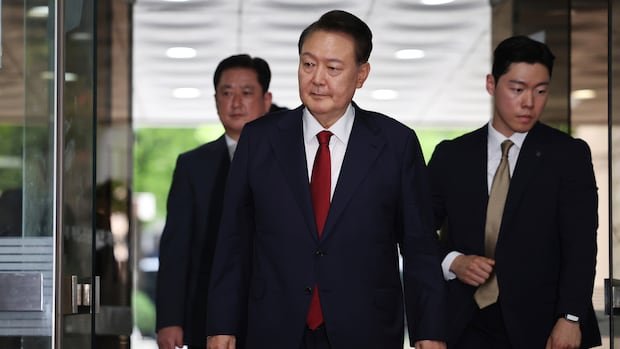
Former South Korean President Yoon Suk Yeol has been handed a life sentence for his short-lived implementation of martial law, marking the climax of the nation’s most significant political turmoil in years. Yoon’s downfall came following an ill-conceived effort to circumvent an opposition-controlled legislature by declaring martial law and deploying troops to encircle the legislature on December 3, 2024.
According to Judge Jee Kui-youn, Yoon was convicted of rebellion for orchestrating the illegal mobilization of military and police forces in a bid to seize control of the liberal-led National Assembly, detain politicians, and establish unbridled authority for an extended period. Yoon is expected to challenge the ruling.
Although a special prosecutor had pushed for the death penalty, arguing that Yoon’s actions posed a grave threat to democracy and warranted the severest punishment available, most experts anticipate a life imprisonment sentence due to the poorly executed power grab not resulting in any casualties.
Since 1997, South Korea has refrained from executing death row inmates, effectively maintaining a de facto moratorium on capital punishment amid growing calls for its abolition.
Upon Yoon’s arrival at the court, a large contingent of police officers closely monitored the situation as his supporters amassed outside the judicial complex, voicing their support as the prison bus transporting him passed by. Meanwhile, Yoon’s detractors congregated nearby, demanding the imposition of the death penalty.
The court also found and sentenced several former military and police officials involved in implementing Yoon’s martial law decree. For instance, ex-Defense Minister Kim Yong Hyun received a 30-year jail term for his pivotal role in devising the plan and mobilizing the military.
Yoon, known for his conservative stance, has justified his martial law decree as essential to thwarting liberals, whom he labeled as “anti-state” elements, from impeding his legislative agenda with their majority status.
The decree was in effect for approximately six hours before being revoked when a quorum of lawmakers successfully breached the military blockade and unanimously voted to lift the measure.
Yoon was suspended from office on December 14, 2024, following his impeachment by lawmakers and was officially ousted by the Constitutional Court in April 2025. He has been in custody since last July, facing multiple criminal trials, with the rebellion charge carrying the most severe penalties.
Recently, Yoon was sentenced to five years in jail for resisting arrest, fabricating the martial law declaration, and bypassing a legally mandated full Cabinet meeting prior to issuing the decree. Additionally, the Seoul Central Court has convicted two of Yoon’s Cabinet members in separate cases, including Prime Minister Han Duck-soo, who received a 23-year prison term for attempting to legitimize the decree through manipulating a Cabinet Council meeting, falsifying records, and perjury. Han has appealed the decision.