
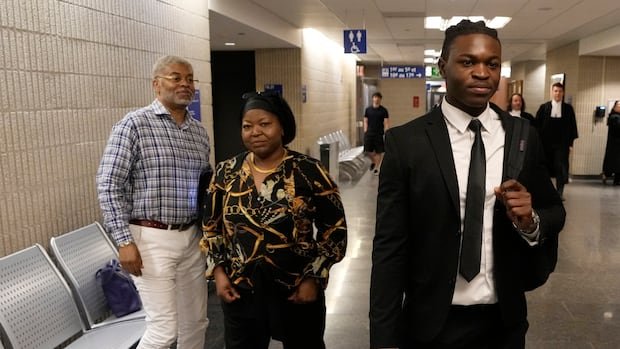
The Supreme Court of Canada is currently hearing arguments in a Quebec case that may have significant implications for policing practices nationwide. Quebec’s attorney general is challenging a lower court ruling that declared random police traffic stops unconstitutional due to concerns of racial profiling and violation of rights. The case, initiated by Montreal resident Joseph-Christopher Luamba, has been progressing through the legal system for four years.
Following presentations from Quebec’s attorney general, Luamba, and various interveners on Monday and Tuesday, the Supreme Court could take several weeks to several months to reach a decision. The case revolves around the debate on the necessity and legality of random traffic stops.
Joseph-Christopher Luamba, the central figure in the case, experienced multiple unwarranted police stops shortly after obtaining his driver’s license. Luamba, who is Black, expressed feeling racially profiled during these stops, none of which resulted in any citations. The Quebec Superior Court, in a ruling from October 2022, found that the provision in Quebec’s Highway Safety Code allowing random stops contravened certain sections of the Canadian Charter of Rights and Freedoms, focusing on the right to life, liberty, and security, as well as protection against arbitrary detention.
The Quebec attorney general is contesting this decision, arguing that random traffic stops are essential for effective policing. Law enforcement agencies, including the Canadian Association of Chiefs of Police and Quebec police chiefs, support the practice, emphasizing its role in promoting traffic law compliance and enhancing public safety.
Concerns over racial profiling have been a key aspect of the debate, with Luamba and advocates highlighting the disproportionate impact on marginalized communities. The Supreme Court’s ruling could set a precedent affecting not only Quebec but also other provinces with similar traffic stop regulations. Random stops are currently permitted in other provinces under a 1990 Supreme Court ruling, allowing officers to conduct checks for compliance with various driving regulations.