
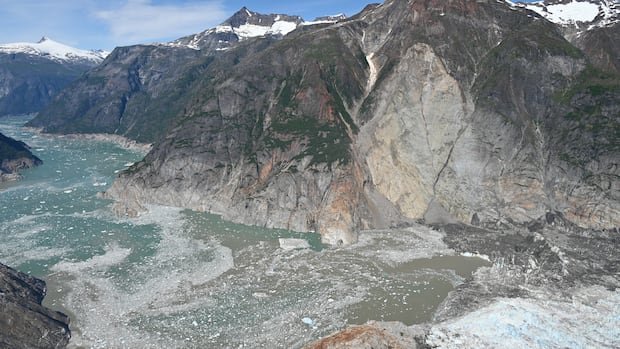
A massive rockslide in an Alaskan fiord triggered a record-breaking tsunami last year, with a wave towering 481 meters high, taller than the CN Tower’s highest viewing platform, according to a recent study. The study’s lead author, Dan Shugar from the University of Calgary, emphasized the catastrophic potential of such events and highlighted the need for policymakers, especially in British Columbia, to address the risks posed by these tsunamis.
The research, published in the journal Science, revealed that the tsunami near the northwest B.C. border was a result of a glacier’s rapid retreat that cleared the path for the landslide. With ongoing climate change and the expansion of infrastructure and cruise ship tourism, the study warns of the increasing hazards associated with landslide-triggered fiord tsunamis.
The rockslide, which occurred in Tracy Arm Fjord, involved over 64 million cubic meters of rock plummeting 1,000 vertical meters. The resulting tsunami had the second-highest wave run-up ever recorded at approximately 481 meters. Fortunately, the cruise ship present in the fiord at the time managed to avoid the tsunami’s path, as it would have been devastating for any vessels caught in its way.
The study highlighted the significant retreat of the South Sawyer Glacier prior to the landslide, attributing it to human-induced warming over the past two centuries. Researchers emphasized the importance of monitoring these slopes for early warning signs and investing in instrumentation to mitigate future risks.
Analyzing seismic data, researchers noted small earthquakes and tremors leading up to the landslide, suggesting the potential for early warning systems. Shugar urged policymakers to consider the national implications of these hazards and the necessity of proactive measures to safeguard against future disasters.