
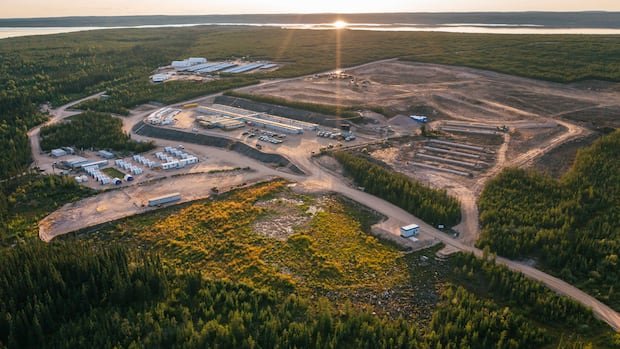
The Canadian Nuclear Safety Commission has given the green light to NexGen Energy Ltd. to construct a uranium mine in the Athabasca Basin, marking the second significant uranium project approved by the national regulator in Saskatchewan this year.
NexGen’s Rook 1 project, an underground mine planned by the Vancouver-based company, will be located in the southern Athabasca Basin, approximately 150 kilometers north of La Loche, within Treaty 10 territory. The commission recently announced the approval of a license for the construction of a mine and mill at the project site, with a separate license required for operational activities.
Scheduled to commence construction this summer, the project is anticipated to be completed within a four-year timeline. NexGen estimates the mine’s potential annual uranium production to reach up to 30 million pounds (over 13,000 tonnes), representing around 20% of the current global fuel supply.
During an interview, NexGen’s vice-president, Adam Engdahl, disclosed that the company plans to invest $2.2 billion over the construction period. Engdahl attributed the swift approval process to the unwavering support received from Indigenous partners and community members, emphasizing the unprecedented backing received.
Upon full operation, the mine is projected to create 459 permanent jobs and sustain operations for a lifespan of 24 years. Ongoing exploration in the region indicates promising uranium deposits that could be developed in the future.
NexGen has forged beneficial partnerships with Indigenous communities impacted by the project, including the Clearwater River Dene Nation, Birch Narrows Dene Nation, Buffalo River Dene Nation, and the Métis Nation-Saskatchewan. These agreements, although confidential, typically encompass employment guarantees, training opportunities, support for local businesses, and financial benefits.
Local community leaders, such as Métis Nation-Saskatchewan Local 39 president Keith Shewchuk, expressed optimism about the transformative impact of the project. Shewchuk highlighted the economic benefits already emerging in the area due to NexGen’s engagement with the local workforce.
In addition to NexGen, other companies are venturing into uranium production in Saskatchewan. Denison Mining Corp.’s Phoenix project, an in-situ uranium mine also situated in the Athabasca Basin, recently received a license to commence mine and mill construction activities.
Cameco Corp., another major player, recently secured a substantial nine-year, $2.6 billion deal to supply India with 22 million pounds of uranium starting in 2027. Trade and Export Minister Warren Kaeding emphasized the positive economic impact of NexGen’s project on the local economy, highlighting the potential for job creation and career development opportunities in the region.
Uranium mining plays a significant role in Saskatchewan’s economy, employing over 2,300 individuals in the province. Nearly half of the workforce in northern uranium mines consists of northern residents, contributing to the local economy and fostering community development.
The Canadian Nuclear Safety Commission conducted public hearings in Saskatoon earlier this year to inform its licensing decision. Interested parties can access hearing submissions from NexGen, communities, and individuals through the commission’s website.