
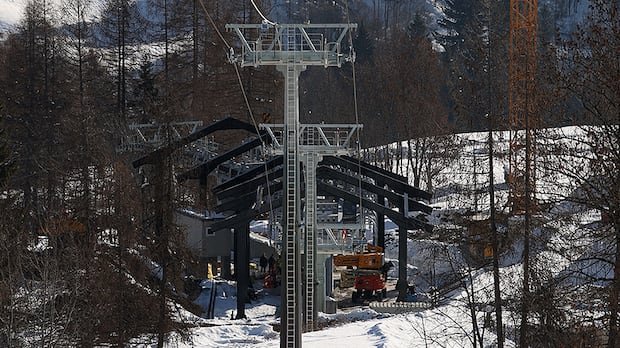
Amidst the picturesque Olympic slopes of Tofane beneath the rugged Dolomite peaks, a flurry of activity unfolds in Cortina d’Ampezzo, Italy. Construction noise fills the air as gravel is excavated, tractors maneuver through muddy roads, and workers bustle around near the event area, just days before the Winter Olympics kick off.
In Cortina d’Ampezzo, last-minute preparations are evident as the curling tournament is set to commence on Wednesday and the women’s downhill training scheduled for Thursday. The rush to complete facilities showcases the challenges faced by organizers, with some projects still unfinished while others have been successfully concluded.
Despite pressures from the International Olympic Committee to relocate events to save time and costs, a new sliding center was completed just in time for the Games. However, a cable car intended for transporting spectators to the women’s Alpine skiing events will not be operational, leading organizers to seek temporary school closures to alleviate transportation strains in the Dolomite resort.
Addressing concerns, Olympic Games executive director Christophe Dubi reassured that essential athlete facilities are ready, though some finishing touches are pending. The organizing committee remains optimistic, despite ongoing work inside and outside the venues to enhance the overall experience.
While IOC president Kirsty Coventry expressed confidence in the progress, the Milano Cortina organizing committee did not provide immediate feedback to inquiries. The upcoming competition, spanning from Feb. 6-22, marks the most geographically extensive Winter Games, hosting nearly 3,000 athletes from 93 nations across six Olympic villages in Northern Italy. Athletes will partake in 116 events across ice and snow, representing eight sports and 16 disciplines.