
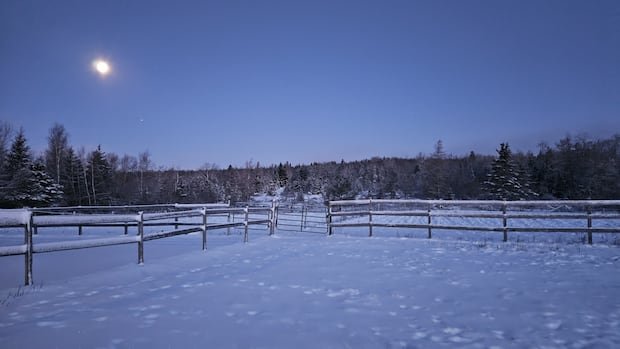
Farmers in Nova Scotia are optimistic about the potential benefits of this winter’s snowfall in aiding their recovery from the severe drought experienced last year. The province has received an average to slightly above-average amount of snow this winter, with most areas having snow cover since mid to late January.
Alicia King, the president of the Nova Scotia Federation of Agriculture and a farmer residing outside Antigonish, N.S., expressed relief at the snowfall, emphasizing its significance in protecting the soil and crops by acting as an insulating layer. The snowfall is expected to contribute essential moisture to the ground as it gradually melts.
Last year, Nova Scotia encountered a significant drought, with precipitation levels dropping to less than 40% of the normal levels, leading to a one-in-50-year drought in the southwestern region of the province. Several towns experienced record low precipitation over a three-month period.
The drought had detrimental effects on fruit-producing trees, particularly apple trees, as highlighted by Emily Lutz, the executive director of the Nova Scotia Fruit Growers’ Association. She described how the trees suffered leaf loss and produced small, shriveled apples due to the drought. The consistent winter temperatures this year are anticipated to aid in the survival of the weakened trees.
Meteorologist Ian Hubbard noted that most parts of Nova Scotia have received average to above-average snowfall this winter. While snow cover has been present since mid-January in many areas, the key concern now is the rate at which the snow melts and its impact on groundwater recharge.
Barret Kurylyk, an associate professor specializing in hydrogeology at Dalhousie University, emphasized the importance of a gradual snow melt in recharging groundwater effectively. He explained how the condition of the ground during the thaw process influences water absorption into the soil.
Looking ahead, Agriculture Canada reports that Nova Scotia is still facing moderate to severe drought conditions as of January 31. Hubbard predicts a warmer than normal March, starting at the end of the current week.
The snowfall this winter brings hope for farmers in Nova Scotia as they anticipate a more promising agricultural outlook in 2026, following the challenges posed by the drought in 2025.