
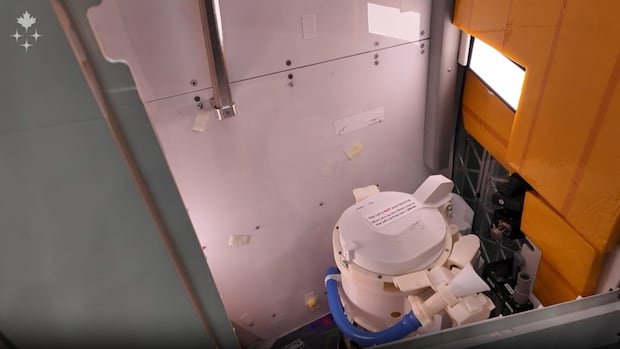
When four astronauts embarked on a space journey spanning over 406,771 kilometers, they carried along a specially designed toilet. It is crucial to test and ensure the functionality of essential human facilities for extended space travel.
The narrative of the toilet on Artemis II, officially named the Universal Waste Management System, unfolded like a dramedy in multiple stages. Following the thrilling launch of Artemis II on April 1, the crew had to address an immediate issue with the toilet. Mission specialist Christina Koch reported a problem about an hour post-launch, which was swiftly tackled by troubleshooting and a reboot.
Describing herself as the “space plumber,” Koch highlighted the significance of the toilet on board. NASA officials later explained the toilet malfunction was likely due to a pump priming issue, considered typical during space missions.
The Universal Waste Management System, located inside the Orion capsule, operates differently from conventional toilets due to zero gravity. Waste is directed into sealed bags, while each astronaut has a personal urine collection system. The urine is vented into space periodically, creating a visually striking frozen stream described as a “blizzard” by mission control.
As Artemis II progressed, challenges with urine venting arose, necessitating innovative solutions like rotating the capsule to melt frozen waste. Inside the capsule, a mysterious odor in the hygiene bay puzzled the crew, but subsequent investigations ruled out any hazardous sources.
Despite intermittent toilet issues, experts expected such glitches during the maiden voyage. The hope is that future missions will address these challenges for prolonged space travel. The toilet will be closely examined upon Artemis II’s return to Earth, ensuring operational efficiency for upcoming missions to more distant destinations like Mars.