
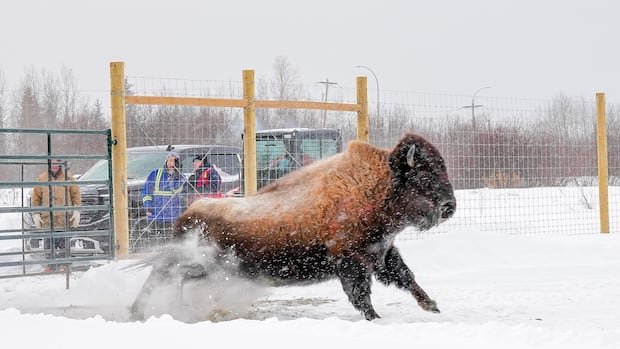
A cacophony of hooves clattering on metal and snow broke through a severe blizzard at a Métis-operated ranch in northeastern Alberta. In a controlled manner, 20 shaggy wood bison dashed out of a metal shipping container and into a fenced area of the boreal forest. As the herd vanished into the swirling snow, there were embraces, cheers, and high-fives. This marked the first bison stampede on the Willow Lake Métis Nation in approximately 120 years.
Around 30 elders and leaders from the community welcomed the relocated herd from Elk Island National Park. The bison now reside on a ranch managed by the Métis community near the hamlet of Anzac, approximately 50 kilometers southeast of Fort McMurray.
“It’s so heartwarming and gratifying… so incredibly beautiful to witness. I’m grateful to be part of it,” said Robert Cree, an elder from the nearby Fort McMurray 468 First Nation. “I’m pleased they’re back home. There used to be buffalo here in the past. My grandfather used to talk about it. I’m glad they’re back on our traditional lands.”
Métis leaders view the ranch’s establishment as a historic milestone for both the Indigenous community and the bison themselves. Kyle Whitford, an Indigenous guardian employed as a trapper for Willow Lake Métis Nation, emphasized the significance of the herd in terms of food sustainability.
“It’s about reintroducing the wood bison to Wood Buffalo,” Whitford stated. “I’m extremely thrilled and relieved now that they’re in their home, which they’ll cherish and enjoy because we constructed it with care.”
The bison herd is part of Willow Lake’s $50 million multi-year plan for food sustainability. The bison will inhabit 16 hectares of the 82-hectare ranch, which will eventually feature hens, honey bees, greenhouses, hydroponics, and community gardens.
“This marks a valuable beginning for our agricultural and tourism ventures, as well as aids in achieving sovereignty, which involves the ability to influence your surroundings,” said Matthew Michetti, overseeing government and industry relations for Willow Lake.
Future plans entail cultural and tourism initiatives such as an Indigenous medicine walk, educational partnerships, and the construction of a visitors’ center. Stella Lavallee, president of Willow Lake Métis Nation, expressed excitement at having elders contribute their expertise to the bison harvest, providing immediate food for Métis families while passing down crucial skills to younger generations.
Feather Bourque-Jenner, the director at Willow Lake, believes the project will help alleviate food and living expenses in the north. “Part of this is reintegrating our lifestyle in a more sustainable manner back into our daily lives,” she added.
Nathaniel Ostashewski, the owner of Cyrus Bison in Bonnyville, Alberta, located over 400 kilometers south, is advising Willow Lake on ranching practices. He anticipates continued growth of the herd, pointing out that the fertile environment, with neighboring Gregoire Lake’s humidity and long northern summer sunlight, will stimulate plant growth. The bison themselves will enhance the muskeg by aerating the soil with their sharp hooves, reintroducing moisture and nutrients. Ostashewski emphasized the ecological benefits, stating, “If bison thrive in Alberta, it benefits us all.”
The return of the bison herd to Métis land marks a significant event for the Willow Lake community, symbolizing a step towards food sovereignty and cultural preservation.