
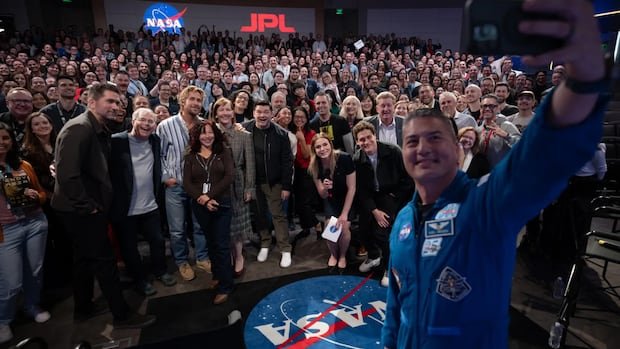
Longtime friends and equally long-standing collaborators Phil Lord and Chris Miller infused Project Hail Mary with the same guiding principles that have shaped their previous works, ranging from 21 Jump Street and The Lego Movie to the more recent Spider-Verse series. In a recent interview with CBC’s Q, Lord expressed their intention for the movie to inspire positivity, stating, “We often say we want this movie to help people imagine goodness because it’s not hard to imagine all of the crummy things in the world, you know? And sometimes we need a reminder.”
The theme of goodness and hope in a narrative about a solitary astronaut embarking on a space mission to unravel a mystery and protect the Earth resonates strongly. It aligns with a cinematic tradition where space-themed movies often coincide with real-world space exploration initiatives or periods of heightened public interest in space-related topics.
Reflecting on the collaborative process of creating Project Hail Mary, Miller remarked, “That was the experience making the film also, which is a bunch of people coming together to do a difficult task.” This echoes a core subplot of the movie, showcasing individuals worldwide uniting to accomplish what seemed insurmountable.
The film’s success has defied expectations, particularly for a standalone project not tied to an extensive franchise or long-established source material with a massive built-in fan base. It has resonated as a true “four-quadrant” movie, appealing to diverse demographics and fostering a collective sense of enthusiasm, camaraderie, and joy, enticing audiences back to cinemas.
Film critic Rachel Ho praised the movie’s uplifting tone, stating, “It’s not all doom and gloom, which I think is a very big plus at the moment with everything else going on in the world.” Audience response has been overwhelmingly positive, indicating a clear demand for the type of content that inspires and uplifts.
The sense of optimism and hope portrayed in Project Hail Mary mirrors a broader trend in cinematic portrayals of space exploration. The movie coincided with the real-life Artemis II mission, reflecting a shared optimism and unity in human endeavors, whether in fiction or reality.
The synergy between space-themed films and real-world space exploration milestones is not coincidental. Collaboration between NASA and Hollywood, including filmmakers like Lord and Miller, serves to inspire and engage the public in the wonders of space exploration. This partnership aims to cultivate support for scientific endeavors and foster a sense of shared achievement and wonder about the cosmos.
NASA leverages public interest in space-themed entertainment to bolster its own initiatives, such as the Artemis program, which seeks to propel human space exploration forward. The enduring appeal of space-themed films lies in their ability to ignite curiosity and ambition, inspiring viewers to reach for the stars and embrace challenges beyond their individual capacities.