
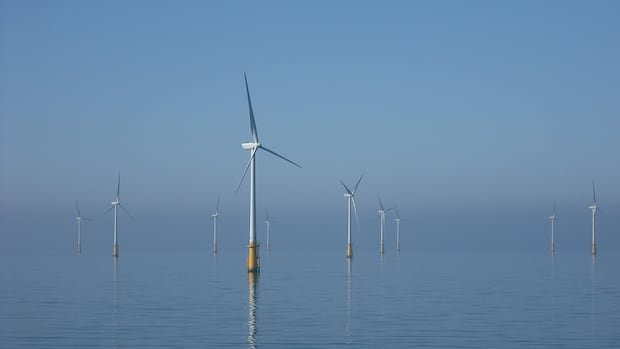
A recent report by engineering firm Stantec, commissioned by the federal government in collaboration with the Atlantic provinces and local power entities, highlights the favorable conditions for offshore wind projects in Atlantic Canada. The region boasts impressive wind speeds and significant development prospects, although the actual energy production capacity may not align with some politicians’ optimistic projections.
According to Ericka Wicks, regional sector lead for energy transition and renewable energy at Stantec, various constraints need consideration before implementing offshore wind projects. Factors such as ocean floor conditions, marine protected areas, ice concerns, shipping routes, and existing fishing zones pose challenges to widespread turbine deployment. Wicks emphasized the importance of assessing the economic feasibility of each location, considering factors like the cost of transmitting power from offshore turbines to onshore facilities.
The Stantec report casts doubts on Nova Scotia Premier Tim Houston’s ambitious energy strategy, particularly his Wind West project. While Houston envisions a five-gigawatt initial phase with future expansions potentially reaching up to 66 gigawatts, Stantec’s analysis suggests a more modest estimate of nine gigawatts by 2050 for Nova Scotia alone. The report outlines a phased approach to wind energy development, starting with fixed-bottom turbines in shallow waters and transitioning to floating platforms in deeper areas.
In a broader context, the report projects that by 2050, Atlantic Canada could collectively generate up to 16.5 gigawatts of power for various markets, including potential exports to neighboring regions. Newfoundland and Labrador, although possessing the highest overall capacity in the region, face challenges due to deep waters, limiting their potential to bring online four to five gigawatts by 2050.
The study also highlights the cost implications of offshore wind projects, with estimated expenses ranging from US$6,360 to US$11,295 per kilowatt for floating turbines, representing a premium compared to fixed-bottom installations. Despite the economic considerations, Nova Scotia remains at the forefront of offshore wind development in the region, with ongoing efforts to advance the sector and explore partnerships for energy distribution.
Looking ahead, the timeline for implementing offshore wind projects remains uncertain, with logistical challenges such as developing high-voltage transmission infrastructure posing significant hurdles. While companies eye 2035 as a potential timeline for turbine installations, the report underscores the need for substantial investments in transmission systems to support the region’s renewable energy goals.
Overall, the report underscores the vast potential of Atlantic Canada’s offshore wind resources while emphasizing the importance of addressing technical, economic, and environmental considerations to realize sustainable energy development in the region.