
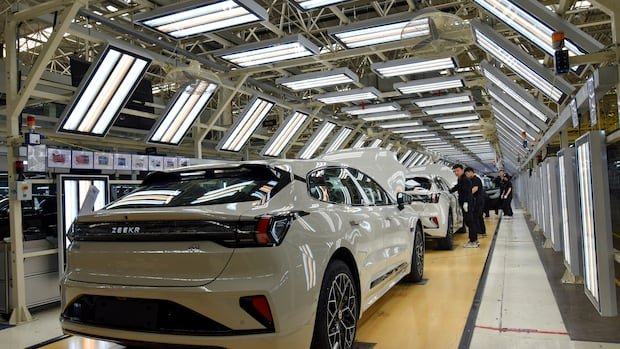
Sooren Moosavy is on the hunt for an economical electric vehicle in the United States due to his environmental concerns and attraction to the smooth driving experience offered by EVs. However, the 28-year-old Baltimore resident is facing a challenge as he explores options from Chinese automakers, like BYD, Geely, and Zeekr, which are currently inaccessible in the U.S.
Moosavy expressed his interest in test-driving or owning one of these Chinese models, drawn to their compact size, luxurious interiors, and competitive pricing. With the average cost of a new car in the U.S. nearing $50,000, more consumers are willing to consider purchasing affordable Chinese cars, despite opposition from industry stakeholders and political parties in the country.
While Chinese electric vehicles have gained popularity in Europe, Latin America, and Canada, the U.S. government has imposed tariffs exceeding 100% on these cars, citing concerns about data security and protecting American jobs. In contrast, several Chinese EVs are available in other regions at prices below $30,000, offering features like advanced driver assistance systems, a built-in mini fridge, and even the option to sing karaoke with passengers.
China has become a dominant player in the global vehicle export market, surpassing Japan. Canada recently agreed to reduce tariffs on Chinese EVs to 6.1% for an initial quota of 49,000 units annually. Despite U.S. President Donald Trump expressing openness to Chinese automakers entering the American market under the condition of hiring U.S. workers, major auto trade groups have urged the government to block their entry, citing concerns about competitiveness.
Senator Bernie Moreno of Ohio adamantly stated his opposition to Chinese vehicles being sold in the U.S., emphasizing the need to support domestic automakers. Conversely, China’s embassy in Washington defended the quality and innovation of Chinese-made cars, dismissing criticism from American detractors.
Although U.S. consumers acknowledge the appeal of affordable Chinese cars, surveys indicate lingering worries about data security and safeguarding local businesses. Dealers like Rhett Ricart remain cautious about introducing Chinese auto brands to the American market, with concerns about safety standards compliance being a key hindrance to permanent ownership of Chinese EVs in the U.S.
Despite these challenges, consumer interest in Chinese cars remains high, with nearly half of surveyed car buyers rating them as offering excellent value. Enthusiasts like Rich Benoit, known for reviewing Chinese car models on YouTube, highlight the affordability as a key driver of interest among consumers seeking efficient and cost-effective transportation options.
Benoit, considering purchasing a BYD model in Mexico and bringing it into the U.S., reflects the growing desire among American consumers to access Chinese EVs. He emphasized the lengthy presence of Chinese cars in the Mexican market and expressed his aspiration to own a Chinese EV in the U.S.