
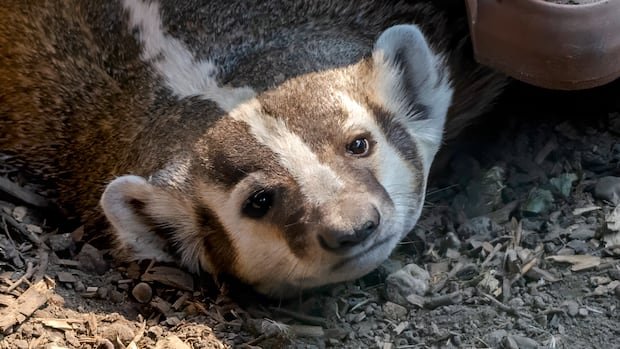
Badgers in the Prairie region are facing similar threats to endangered populations in Ontario and British Columbia, according to a recent federal assessment. The American badger, the only species of badger on the continent, is divided into three populations by the Committee on the Status of Endangered Wildlife in Canada (COSEWIC), which evaluates the at-risk status of native species and advises the federal government.
In December, the COSEWIC designated the “Kootenay, Prairies, and Rainy River” population, covering badgers across the Prairie provinces, southeastern British Columbia, and northwestern Ontario, as “special concern.” The other two populations in southwestern Ontario and the B.C. Interior are classified as endangered, with estimates of fewer than 250 adult badgers in each region.
Chris Johnson, a member of the COSEWIC terrestrial mammals subcommittee and a professor at the University of Northern British Columbia, highlighted the challenges in estimating badger numbers due to their elusive nature. He emphasized that badgers face various risks and threats to their survival in Canada, including habitat loss, vehicle collisions, and human-related fatalities.
According to Johnson, it is crucial to manage these threats to prevent badgers from further endangerment. The “special concern” designation by COSEWIC indicates the need for proactive measures to safeguard the species from reaching threatened or endangered status at the federal level.
In Alberta, the government’s Wildlife Watch Program monitors roadkill incidents annually, with 112 badger roadkill carcasses reported in 2024. Wildlife biologist Chris Fisher noted that badgers are often found near roadsides due to the ease of digging burrows in sloped ditches where Richardson’s ground squirrels, a key prey, are abundant. This proximity to roads increases the risk of vehicle collisions, posing a significant threat to the badger population.
Fisher explained that habitat loss, especially in the endangered populations of southwestern Ontario and the B.C. Interior, limits the available land for badgers. The encroachment of suburban areas into former badger habitats exacerbates the challenges faced by these iconic species, highlighting the importance of preserving Canada’s grasslands, one of the most endangered ecosystems globally.
Described as “ecosystem engineers,” badgers play a vital role in maintaining biodiversity by creating burrows used by numerous species. However, they are often persecuted by humans due to concerns about property damage and livestock safety. Fisher emphasized the need for conservation efforts to protect badgers and their habitats, including implementing measures to mitigate conflicts between badgers and human activities.
Badgers have been classified as a sensitive species in Alberta since 2000, indicating the need for special attention to prevent their decline. While they are recognized as furbearers in Alberta, allowing hunting and trapping, landowners have the authority to eliminate badgers on their properties. Fisher advocates for collaborative efforts between wildlife experts and landowners to safeguard sensitive species and promote coexistence with wildlife in shared environments.