
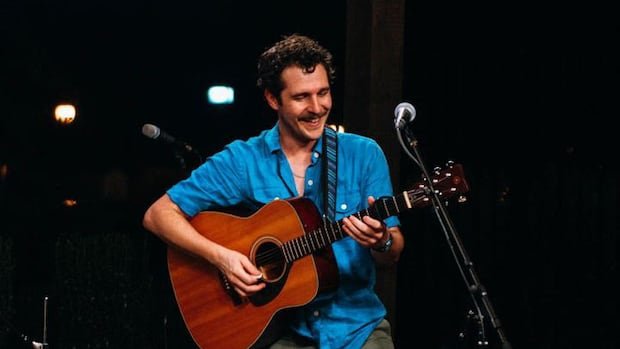
When the United States and Israel conducted attacks on Iran at the end of the previous month, singer-songwriter Joseph Terrell found himself consumed by the conflict. This led him to channel his thoughts into crafting song lyrics.
Hailing from North Carolina, Terrell reflected on the American self-image of being heroic explorers, portrayed in movies as riding off into the sunset with glory. His resulting song, titled “Cowboy Movie,” delves into the origins of these myths and challenges the notion that the U.S. always plays the role of the hero.
Terrell clarified that “Cowboy Movie” does not target any specific political figure, as many could fit the description. However, the song does draw attention to real events, such as the tragic bombing of a girls’ school in Iran during the initial stages of the conflict, which claimed the lives of over 165 individuals, mainly children. While no nation has officially claimed responsibility for the attack, a preliminary inquiry cited by the New York Times suggested U.S. involvement.
Using platforms like TikTok, Terrell unveiled the first verse and chorus of his politically charged songs, garnering significant attention. Similarly, a new wave of artists, including Jesse Welles, is leveraging digital channels to revive the tradition of folk protest music, infusing it with contemporary political commentary.
In this resurgence of protest folk, characterized by a singer-songwriter style, the genre finds renewed relevance, resonating with audiences in a tech-dominated era. These modern protest songs, unlike their predecessors, adopt a more direct approach by naming and criticizing specific politicians and administrations with precise and timely lyrics.
Jesse Welles, a prominent figure in this movement, has gained immense popularity on TikTok for his music addressing diverse issues, from the war in Gaza to immigration enforcement. His rapid release of tracks, such as “Tylenol” and “Charlie,” in response to unfolding events has contributed to his widespread appeal.
The evolution of protest music into a digital realm marks a departure from its historical presence at live events and rallies. However, scholars emphasize the importance of bridging this online activism with real-world engagement to sustain the movement’s momentum and impact.
As these contemporary protest songs strive to provoke social change, artists like Olive Klug and Carsie Blanton actively involve their audiences in advocacy efforts, creating a platform for meaningful dialogue and tangible contributions to societal issues. Ultimately, these musicians aim to complement broader calls for material change by using their music to amplify critical conversations.