
A recent report from the national energy regulator in Canada suggests a significant surge in electricity demand by the year 2050. This projection also anticipates a substantial increase in natural gas production and the expansion of renewable energy sources across the country.
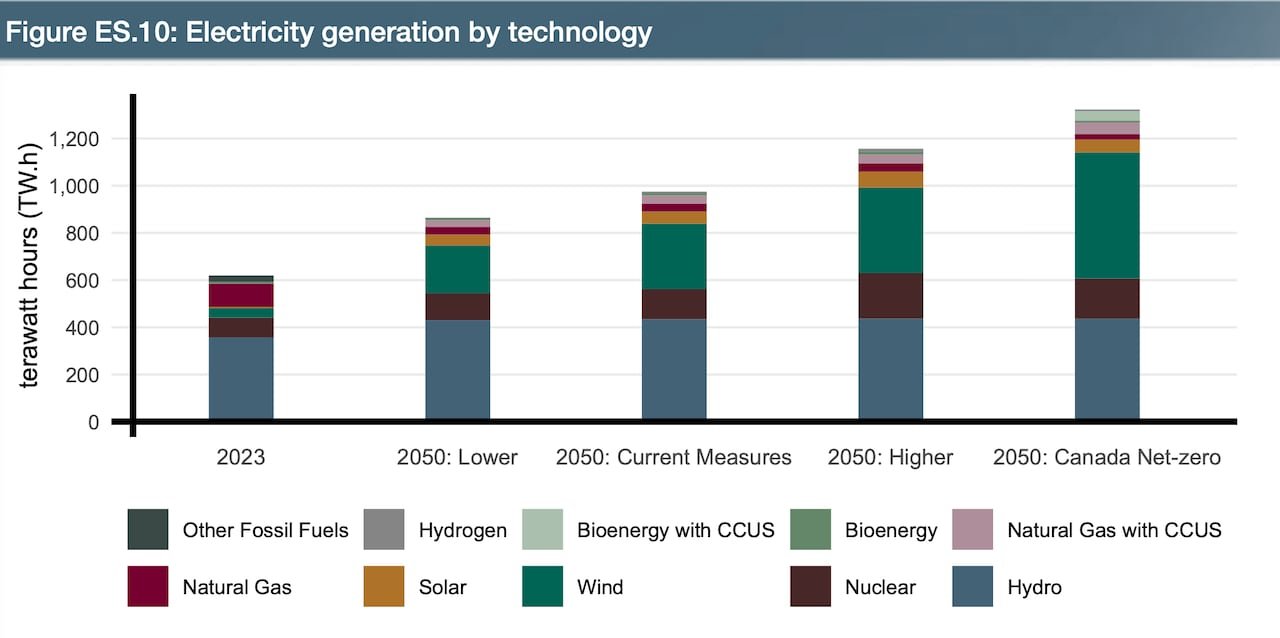
The Canada Energy Regulator (CER) forecasts a 44% rise in power consumption from 2023 to 2050, fueled by growing residential, industrial, and technological sector needs, particularly from AI data centers.
According to the CER’s latest modeling, the nation’s electricity system’s capacity is expected to double from 160 gigawatts in 2023 to 310 gigawatts by 2050. This growth will mainly be driven by wind energy, which may escalate from 40 terawatt-hours in 2023 to 277 terawatt-hours by 2050.
Darren Christie, the CER’s chief economist, highlighted the increasing prominence of wind and solar energy alongside stable sources like hydroelectricity, nuclear, and natural gas to meet the escalating power demands.
The report also emphasizes the crucial role of interprovincial power lines in balancing electricity supply and demand, with a projected 70% growth in total interprovincial transmission capacity by 2050.
Ontario’s energy landscape is evolving with the construction of small modular nuclear power plants, part of a larger initiative costing over $20 billion. Similar nuclear projects are also underway in provinces like Alberta and Saskatchewan.
The report foresees relatively stable consumption of oil and natural gas over the coming decades, with a marginal 1% increase in fossil fuel usage by 2050 compared to 2023.
Diverse oil production scenarios
Natural gas production is expected to rise from around 19 billion cubic feet per day in 2025 to a range of 21 billion to 32 billion by 2050, contingent on the development of liquefied natural gas (LNG) export facilities.
While one operational LNG facility exists on the West Coast, several others are in different stages of development or construction, serving as significant drivers for the projected growth in natural gas production.
The long-term outlook for oil production remains uncertain due to factors like fluctuating global commodity prices. The report suggests that Canada’s oil production could increase by 18% or decrease by 12% by 2050.
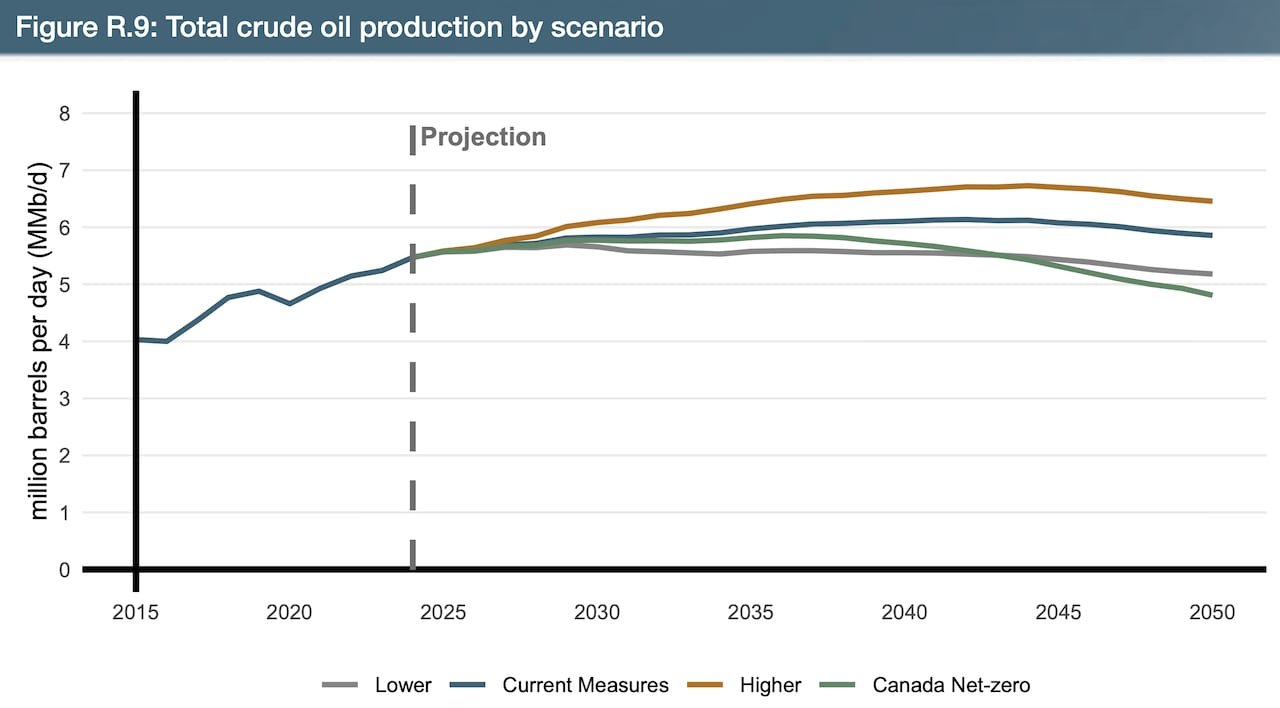
With four distinct scenarios, including a traditional baseline projection, the report suggests that oil production could peak at 6.1 million barrels per day by 2042 before stabilizing at 5.9 million barrels by 2050.
Currently, Canada’s oil production is at record levels and is anticipated to climb further in the next few years.
- <a class="similarLink" href="https://www.cbc.ca/news/business/crea-numbers-february-2026-9.7130835" data