
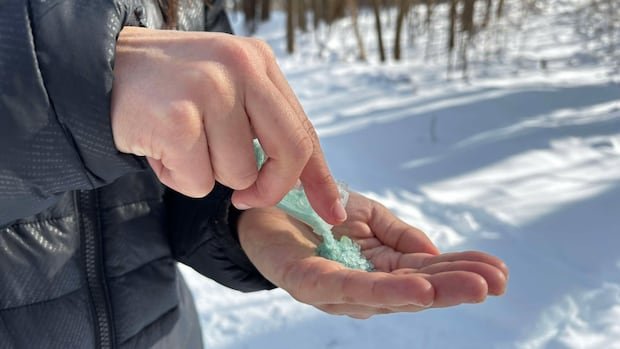
Amid a persistent cold spell in southwestern Ontario and a concurrent shortage of road salt in various municipalities, there is a growing emphasis on exploring alternative methods for melting ice on roads. Researchers at Western University have initiated a study since 2022 to investigate this issue and are set to unveil their findings later this summer.
The study is evaluating nine different substances to assess their effectiveness in melting road ice across different conditions. Christopher Power, an associate professor involved in the research, highlighted that sodium chloride, commonly known as rock salt, has been the preferred choice for Ontario municipalities due to its affordability and accessibility.
Although rock salt efficiently clears ice by reducing water’s freezing point, preventing new ice formation, it also poses well-documented drawbacks. Its corrosive nature can accelerate the deterioration of metal structures near roads and contribute to environmental degradation. The excessive use of salt leads to contamination of water bodies like rivers and the Great Lakes, prompting concerns about ecosystem harm.
Power mentioned that rock salt’s effectiveness diminishes significantly at temperatures below -10°C. The research at Western University is exploring alternative ice-melting substances, including sodium acetate and beet juice, which have shown promise in other applications. The study involved conducting experiments on the university campus to compare the efficiency and corrosiveness of these substances.
While the study phase has concluded, researchers are currently analyzing the data to determine the most effective sodium chloride alternative. Despite the potential benefits of these alternatives, Power believes that the economic factor will influence their widespread adoption. Municipalities, constrained by budget considerations, may continue to rely on rock salt for road de-icing, though supplemental use of less corrosive substances in specific areas could be beneficial.
Many municipalities are now adopting a more targeted approach to salt application, especially in light of the current salt shortage. The City of London, for instance, plans to increase plowing frequency and reduce salt usage by incorporating other substances into the road-clearing process during extreme cold snaps. Joel Gillard, London’s division manager of road operations, highlighted the need to adjust strategies in response to weather conditions, utilizing sand-salt mixes when traditional methods prove ineffective.
As municipalities explore various options to address road ice concerns, the quest for effective and environmentally friendly de-icing solutions continues.