
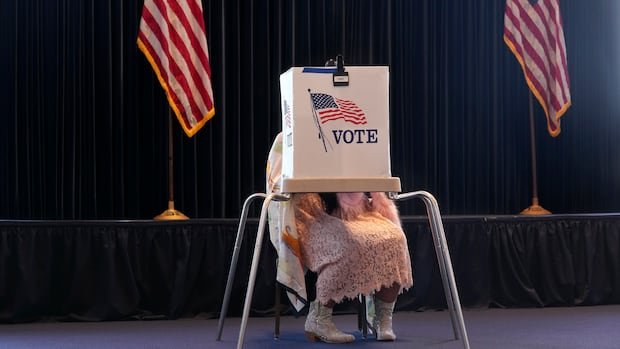
At a time when U.S. politics seems more divided than ever, it might be expected that American voters would strongly align with either the Republican or Democratic parties. However, fresh data from Gallup polling of over 15,000 U.S. adults reveals a different trend. The conducted polling throughout 2025 uncovered that a record 45 percent of Americans now consider themselves political independents, not affiliated with any party.
This shift suggests a growing disinterest in both major parties among the populace, potentially leading to a concentration of power among a smaller group of loyal voters. Such a scenario could perpetuate a cycle of polarization, further distancing potential voters. Chad Peace, a political consultant and legal advisor to the Independent Voter Project, a non-profit organization advocating for unaffiliated voters’ participation in elections, highlighted how the current U.S. political landscape, driven by polarization-inducing incentives, is pushing more voters away.
Gerrymandered districts, where many votes hold little sway, and primaries that often exclude non-partisans, are cited as significant contributors to the issue. Peace emphasized that these factors are what independent voters are rebelling against. Jared McDonald, an assistant professor of political science at the University of Mary Washington, noted that independents are generally less politically engaged, leaving more influence in the hands of extreme voices within the two major parties.
Gallup’s long-term tracking of party identification since 1988 shows a rise in independent voters starting in 2008, post-Barack Obama’s initial presidential win, with a notable increase following Donald Trump’s first term. The firm attributes this record high partly to changing voter habits, particularly among younger generations who are less likely to align with a single party over time.
Younger Americans, including millennials and Generation X, continue to identify as independents at notable rates as they age, diverging from past trends. The latest data indicates a growing trend of independence, with 56 percent of Gen Z adults self-identifying as independent voters. McDonald highlighted that while young people are interested in politics, they are averse to the entrenched polarization represented by the two major parties.
The polling results, gathered through telephone interviews over 2025, revealed a significant 45 percent of respondents identifying as independents, with an equal split between Democrats and Republicans at 27 percent each. Among independents, 20 percent lean towards the Democratic Party, 15 percent towards the Republican Party, and 10 percent remain unaligned.
In the 2024 election, independent voters were evenly split between Donald Trump and Kamala Harris. The data doesn’t specify voter turnout or future voting intentions. McDonald noted that for many independents, their stance is more about opposing a party rather than aligning with one.
Overall, the data signals a shifting political landscape in the U.S., with a growing number of Americans opting for independent status amid perceived polarization and disenchantment with traditional party politics.